
Fatal rockfall at Egypt's Sukari gold mine kills worker, injures five others
A tunnel collapse at the Sukari gold mine in Egypt's Eastern Desert has resulted in one fatality and five injuries, prompting suspension of operations in the affected area and a safety investigation.
Investigation launched
A worker was killed and five others injured following a rockfall inside an underground tunnel at Egypt's Sukari gold mine on Sunday, officials announced. The incident has led to the immediate suspension of operations in the affected section while authorities launch a full safety investigation.
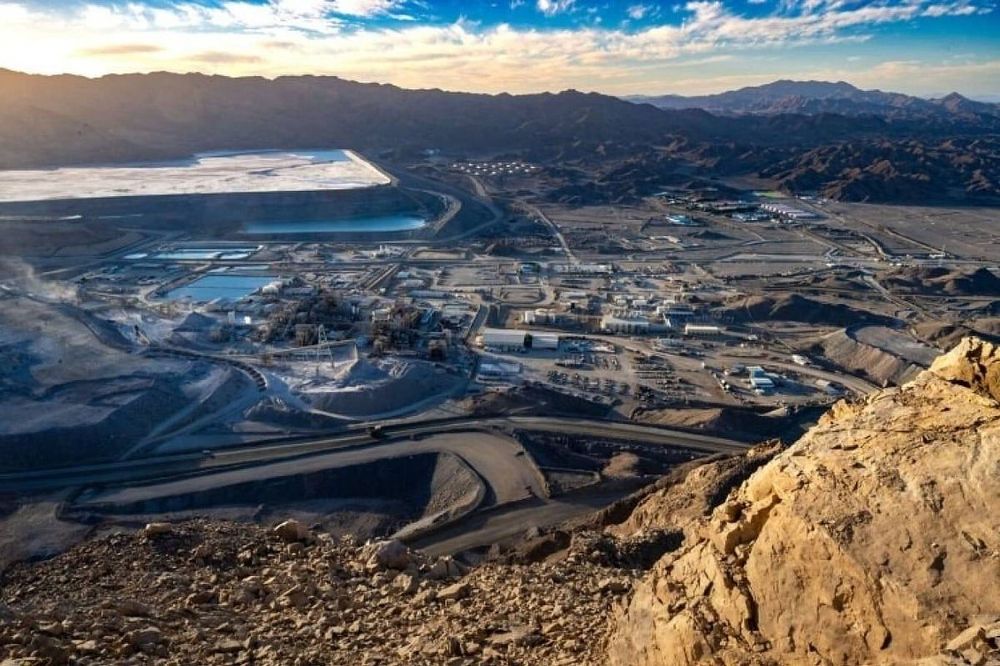
The accident occurred within one of the tunnels in the underground mining area of the Sukari facility, located approximately 750 kilometers southeast of Cairo in Egypt's Eastern Desert. The mine operates about 25 kilometers southwest of the Red Sea coastal town of Marsa Alam.
The injured workers were transported to a hospital in Marsa Alam, where preliminary medical reports indicated their conditions were stable, according to a statement from Egypt's Ministry of Petroleum and Mineral Resources.
Investigation launched
Karim Badawi, Minister of Petroleum and Mineral Resources, ordered the formation of an investigative committee to examine the circumstances surrounding the incident and conduct a comprehensive review of safety procedures at the facility. The committee has been tasked with recommending preventative measures to avoid similar occurrences in the future.
Operations in the affected tunnel have been suspended while safety standards undergo thorough review and the investigation proceeds, officials confirmed.
Egypt's largest gold operation
The Sukari mine stands as Egypt's largest and most productive gold mining operation, accounting for the majority of the country's approximately 15.8 tonnes of annual gold production, according to World Gold Council data. The facility is operated by Sukari Gold Mining Company, a 50-50 joint venture between the Egyptian Mineral Resources Authority and AngloGold Ashanti, which acquired the operation in November 2024 for $2.5 billion from London-listed Centamin.
The mine operates as both an open-pit and underground mining facility, employing a workforce of 4,893 including contractors. Commercial production at Sukari began in April 2010, making it Egypt's first modern large-scale gold mine. Since then, the operation has yielded more than 6 million ounces of gold.
Production performance
In 2025, the Sukari mine achieved record production of 500,000 ounces of gold valued at $612 million, representing a 4 percent increase from the previous year's output of 481,000 ounces. The facility has maintained strong performance in 2026, producing 232,000 ounces of gold in the first half of the year and remaining on track to meet its full-year production target of 500,000 ounces.
The Sukari mine sits within Egypt's Eastern Desert, a region containing more than 90 documented gold deposits. The area forms part of the Arabian-Nubian Shield, known for its extensive mineral resources, and has a gold mining history extending back to ancient Egypt.
The incident comes as Egypt expands its mining sector, with the government pursuing a strategy to increase mining's contribution to 5 percent of GDP. A second modern commercial gold mine at Abu Marawat is expected to begin production in 2026.