Abu Dhabi's Indian residents prepare for Diwali at home and across the city
Indian families in Abu Dhabi are decorating their homes, preparing sweets and gathering with neighbors ahead of Diwali on Sunday, November 8, 2026. As schools, workplaces and the BAPS Hindu Mandir join the celebrations, two residents told Gulf News about the traditions they maintain abroad and the parts of the festival they miss.
 Mariam Al Mansoori
Two households, different traditions
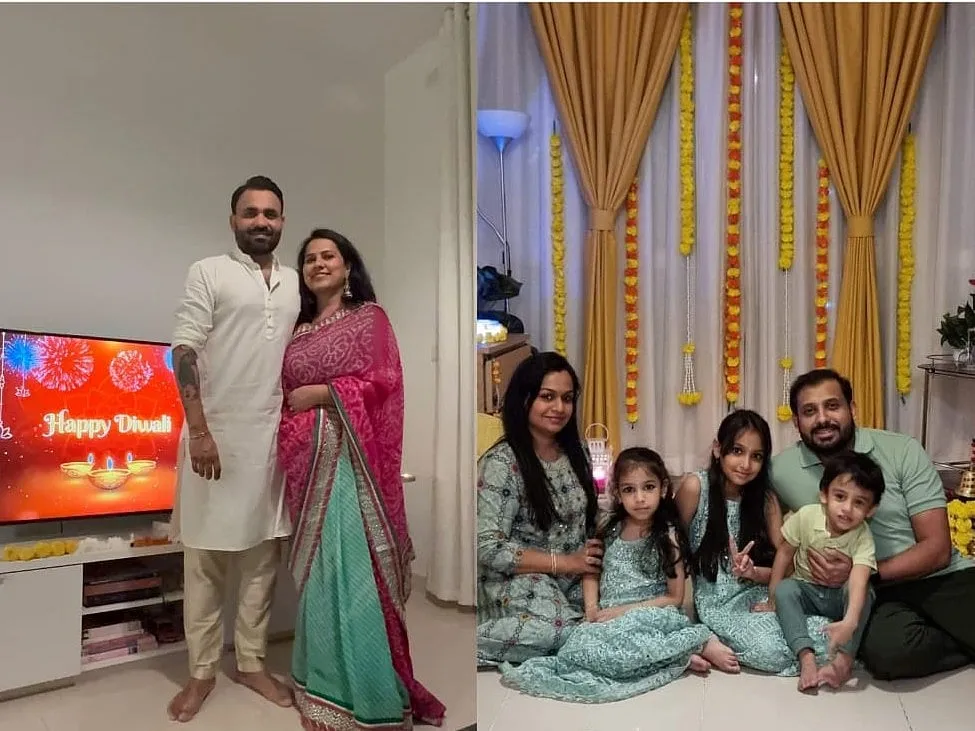
Yellow marigolds are central to Riti Bahel's preparations. A senior manager who has lived in Abu Dhabi for seven years, she decorates her apartment with the flowers, rangoli, fairy lights and diyas, following her mother's example in India. She makes the effort even without a house full of guests.
"I want my home to feel exactly like the home I grew up in," she said. "Somehow, it's all part of the festive excitement," she added. "I think those little things make it feel a little more like home."
For Vanitha Vinod, cleaning the home precedes the other rituals: putting up marigold garlands, taking an oil bath, preparing manjal dosa and lighting a lamp beside the rangoli at her entrance. The aromas she associates with Diwali come from chakli, also called murukku in South Indian households, and besan ke laddu.
Their customs draw on northern and southern Indian traditions, respectively. Both women make familiar decorations and food part of their celebrations in Abu Dhabi, though they find their festive supplies in different places.
Bahel shops at Adil supermarket or uses quick-delivery apps for last-minute purchases. Marigolds require more effort. "Sometimes you have to make your way to Perumal and stand in a queue just to get your hands on them, because not many places stock these flowers," she said. Vinod shops at Lulu for decorations and ethnic clothing imported from India.
Vinod's celebrations also bring neighbors together for homemade sweets, cards, family karaoke nights and, she said, bursting crackers. "Celebrate together and distribute sweets," she said, describing her approach to the occasion.
Celebrations beyond the home
Across the UAE, festivities begin in the week leading up to Diwali. Abu Dhabi's malls have seasonal decorations and activities for different age groups, with WTC Abu Dhabi combining festive shopping with family activities.
Children at Indian schools have been preparing for weeks, crafting paper lanterns and other decorations for their classrooms. At work, Indian employees have introduced colleagues of other nationalities to their traditions through shared celebrations, festive clothing and sweets.
Diwali is not an official UAE public holiday. Schools and offices remain open unless leave is granted, although the main celebration this year falls on a Sunday, part of the standard weekend. WOW-ABUDHABI lists the UAE's published Lakshmi Puja muhurat, or auspicious time, as approximately 5:58 p.m. to 7:56 p.m. local time on November 8.
Temple program and visitor requirements
The BAPS Hindu Mandir in Abu Dhabi is hosting Diwali and related celebrations from November 6 through 10, with free admission. Every visitor must nevertheless register ahead of time; walk-ins are not allowed. Visitors must reserve a date and time through the temple's website or the Mandir Abu Dhabi app and bring an original physical Emirates ID or passport. Security does not accept digital copies of those documents.
The Maha Annakut Darshan is scheduled for November 8 through 10, from 9 a.m. to 8 p.m. each day. Hundreds of vegetarian dishes will be presented before the deities to welcome the Hindu New Year. The 2026 display takes sacred birds carrying offerings as its theme, and families can offer a thali in their name at any of seven shrines.
That schedule includes a special opening on Monday, November 9. Although the mandir ordinarily closes on Mondays, visitors will be able to attend darshan and see the Maha Annakut from 9 a.m. to 8 p.m.
On November 8, the Diwali Puja, or Chopda Pujan, begins at 6:30 p.m. Families may bring office ledgers and account books for blessings, a tradition marking the new financial year.
According to ThingsToDo.ae, more than 60,000 people attended the mandir's Diwali and Maha Annakut celebrations in 2025, its second Diwali. Alongside account-book blessings, that year's program featured an annakut built around seven sacred trees. Food was also used to create models of the Burj Khalifa, Louvre Abu Dhabi, Ferrari World and an Emirates plane.
What distance changes
For Bahel, creating a familiar atmosphere at home has become more important than finding it elsewhere. "I'm still looking for that one special place," she said. "But for me, Diwali has always been about home. So, I've stopped looking for the festive feeling outside and started bringing it home."
She still misses festival visits to a temple, childhood memories of bursting crackers with her sister, and trips to relatives' homes to exchange gifts. "You don't realise how precious these little things are until you are away from them," she said.
Living outside India has heightened her appreciation of both the occasion and the people who share it. "I think today I value those moments and the people around me so much more," she said, describing her Abu Dhabi celebration as "a home away from home".
Vinod's main difficulty is finding enough space for a large community celebration. She recalled gatherings in India where residents shared the arrangements and costs of events held in a hall or on open ground. "That is something challenging here," she said.
Her view of festivals, however, has remained largely unchanged. She considers the UAE her second home and thanked its leadership for enabling expatriate communities to observe their cultural and religious festivals. Diwali in Abu Dhabi, she said, is "peaceful, without having to miss India."