Teaching children to be human in the age of AI
As artificial intelligence becomes woven into the fabric of childhood education, parents and educators face a critical challenge: ensuring children develop empathy, judgment and human connection alongside their digital skills.
Teaching children to be human in the age of AI
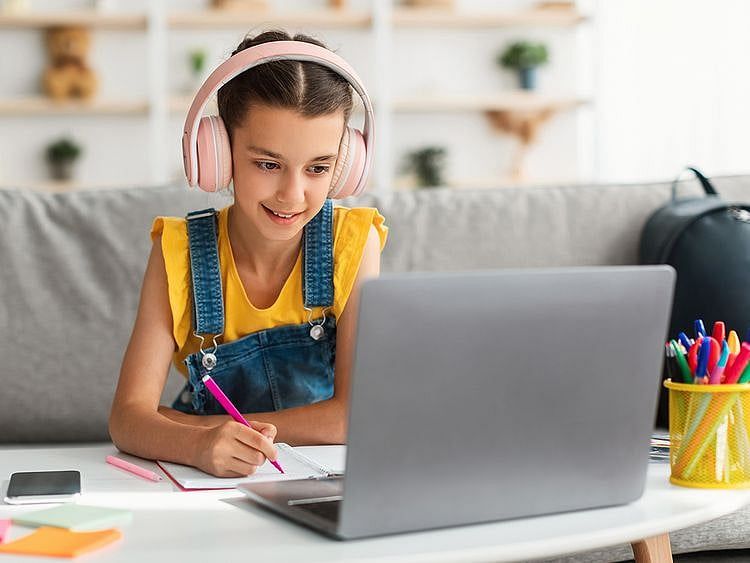
Artificial intelligence has become an integral part of how children learn and grow. With 86% of students globally now using AI tools for their studies—a dramatic surge from just 66% in 2024—technology is reshaping childhood at an unprecedented pace. AI can answer questions, create stories, generate images, translate languages, solve complex problems and personalise learning in ways previous generations could never have imagined.
When used thoughtfully, AI represents an extraordinary educational resource, one capable of extending human potential and unlocking new avenues for learning and creativity. Yet as we guide children in harnessing these powerful tools, we face an equally vital responsibility: teaching them to remain fundamentally human in a world increasingly mediated by intelligent machines.
The central question confronting parents and educators is not whether young people will master technology—they almost certainly will. Rather, it is whether they will preserve the qualities that define our humanity: empathy, compassion, curiosity, courage, kindness, discernment, resilience, patience and the capacity to build meaningful relationships.
Understanding AI's limitations
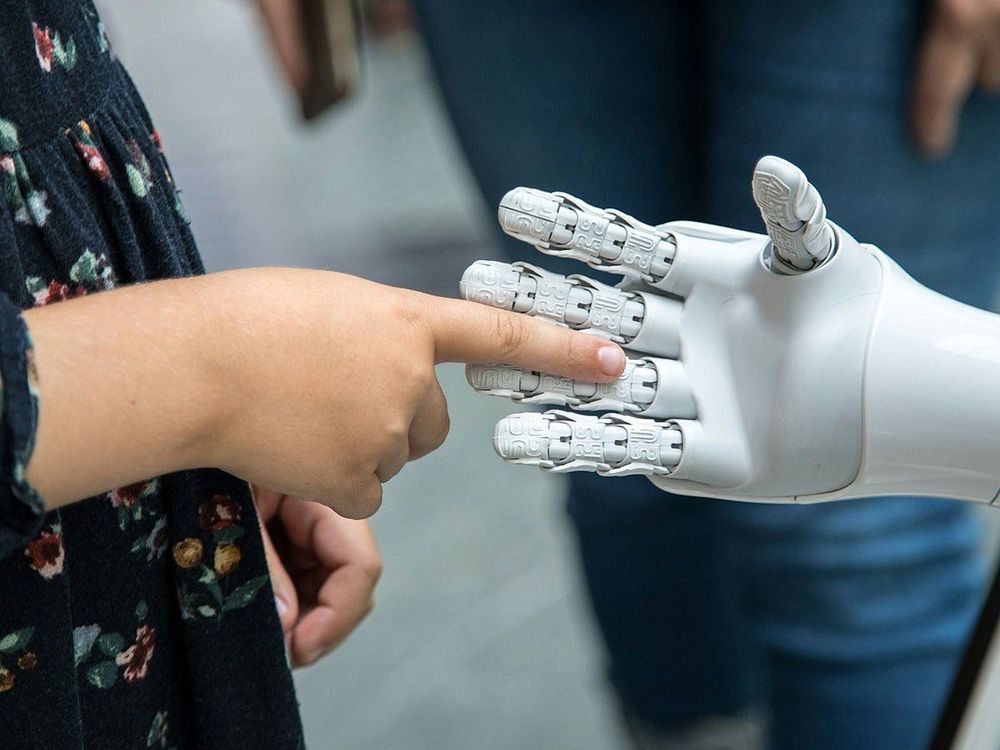
AI can simulate conversation, but it cannot offer the warmth of a reassuring embrace. It can generate poetry about grief without ever experiencing loss. It can provide advice without possessing human conscience or lived experience. It can identify patterns but cannot assume responsibility for the choices we make. These distinctions matter profoundly.
A 2025 Harvard University physics study illustrates this divide clearly: while students using AI tutors learned more than twice as much in less time compared to those in traditional classrooms, human tutors remained far superior at interpreting emotional states, achieving 92% accuracy compared to AI's 68%. This gap underscores a fundamental truth—technology excels at information processing but falls short in understanding the human heart.
Children must understand that AI is a tool, not a replacement for human instinct, relationships or values. We should encourage them to question, explore, create and learn, but never surrender their own judgment to machines. The ability to ask "Is this right?" ultimately matters more than the ability to ask "Is this possible?"
Cultivating human qualities through experience
Human qualities are not imparted through lectures alone. They develop through lived experience. Children need opportunities to interact with people, not just screens. Family meals where everyone engages in conversation. Visits to grandparents and relatives. Conversations with neighbours. Playing outdoors with friends. Participating in sports, music, theatre and community activities. Helping someone in need. Listening to another person's story. Resolving disagreements face to face.
These seemingly ordinary experiences serve as powerful lessons in humanity. They teach children to read facial expressions, interpret emotions, negotiate differences, wait their turn, apologise, forgive and understand perspectives different from their own. No algorithm can fully replicate the richness of these human encounters.
Setting boundaries around technology
This is why establishing boundaries around devices remains crucial. Technology should not quietly consume the time children need for relationships, play, reflection and conversation. Families require clear and consistent expectations around screen use, particularly during meals, family time and before bedtime.
The American Academy of Pediatrics updated its guidance in 2026, moving away from rigid time limits to emphasise quality, context and conversation. Their recommendations include no screens before 18 months and limiting high-quality content to one hour daily for ages 2-5. The objective is not to make children fearful of technology, but to ensure it does not become the default response to boredom, loneliness or discomfort.
Content matters as much as time
What children consume matters as much as how much they consume. A developing mind is profoundly shaped by the stories, images and behaviours to which it is repeatedly exposed. Parents must be thoughtful about age-appropriate television programmes, films, social media and online content.
Research from the American Academy of Pediatrics indicates that media violence can contribute to aggressive behaviour, desensitisation to violence, nightmares and fear of being harmed in children. Violence and horror should not be introduced casually or prematurely. Young minds often lack the emotional maturity to process what they see. Repeated exposure to graphic violence or adult themes can normalise extreme behaviour and dull the emotional responses such content should evoke.
The same principle applies to portrayals of relationships, gender, conflict and success. Children absorb messages about how men and women behave, how people treat one another, what constitutes popularity and what is considered acceptable—often without consciously recognising they are learning these lessons.
This does not mean shielding children from everything difficult. Children eventually need to understand that the world contains violence, injustice, suffering and complexity. But exposure needs to be gradual, contextualised and age-appropriate, allowing them to develop the emotional and cognitive maturity to make sense of what they encounter.
The role of schools in the AI age
Educational institutions bear equally important responsibilities. Education cannot be reduced to academic achievement or digital fluency alone. Schools must deliberately create spaces where children collaborate, debate, serve others, create, perform, lead and sometimes fail.
The UAE has taken concrete steps in this direction. Starting in the 2025-2026 academic year, the Ministry of Education introduced artificial intelligence as a mandatory subject across all government schools from kindergarten to Grade 12, training over 1,000 teachers to deliver the curriculum. The programme covers seven key domains: fundamental concepts, data and algorithms, software, ethical awareness, real-world applications, innovation and project design, and policies and community engagement. Notably, assessment focuses on practical projects rather than written exams, emphasising the ethical and responsible application of AI technologies.
This approach recognises a crucial insight from the World Economic Forum's 2025 report: less than 30% of teaching-related skills such as mentoring and coaching can be handled by AI, making teaching one of the least automatable professions. Human connection remains irreplaceable in education.
Teachers using AI tools at least weekly save an average of 5.9 hours per week—roughly six extra weeks of reclaimed time across a standard school year. This efficiency gain allows educators to focus more energy on what machines cannot do: building relationships, fostering emotional intelligence and guiding moral development.
Schools must teach digital literacy alongside emotional literacy, critical thinking alongside compassion, innovation alongside ethics. As the global AI in education market grows from $10.4 billion in 2026 to a projected $32.27 billion by 2030, this balanced approach becomes increasingly essential.
Raising humans, not machines
The age of AI demands children who are technologically capable—but also morally grounded. We should not fear machines becoming more intelligent. We should worry about humans becoming less thoughtful, less empathetic and less connected.
Our responsibility is not to raise children who can compete with machines at being machines. It is to raise children who know what machines cannot be—and what they themselves must never stop being. In the age of artificial intelligence, perhaps our most important educational ambition should be very simple: teach children to be human.