American Doctor: Documentary chronicles medical crisis in Gaza through eyes of three US physicians
New documentary follows three American doctors from different backgrounds as they witness unprecedented medical catastrophe in Gaza hospitals under Israeli bombardment, premiering in US theaters Friday.
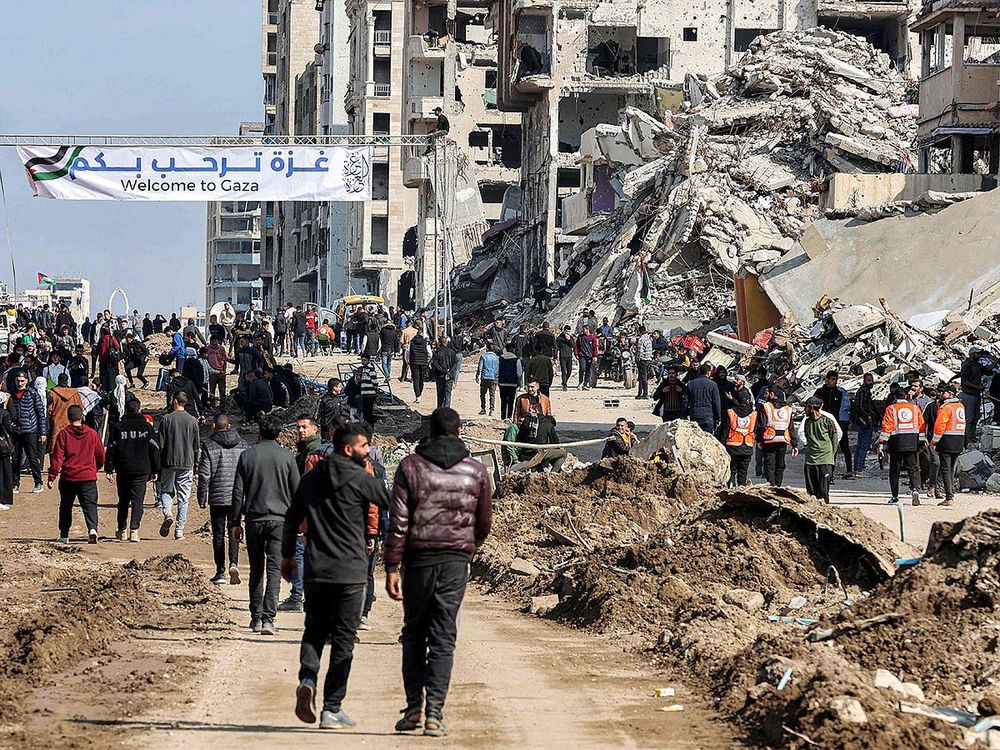
'American Doctor' shows brutality of conflict in Gaza
Mark Perlmutter, president of the World Surgical Foundation, has treated patients across 30 countries during more than 40 humanitarian deployments over three decades. His work has taken him through natural disasters and conflicts, from the September 11 attacks in New York to Hurricane Katrina in Louisiana and the 2010 Haiti earthquake. Yet nothing prepared the orthopedic surgeon from Carolina Regional Orthopaedics in Rocky Mount, North Carolina, for what he would encounter in Gaza.
"Just our first week in Gaza was worse than all of my experiences combined," Perlmutter said of his deployments to the Palestinian territory since Israel launched its military response to the October 2023 Hamas attack.
The harrowing experiences of Perlmutter and his colleagues form the core of "American Doctor," a documentary premiering in select US theaters this Friday. The film marks the feature directorial debut of Poh Si Teng, whose producing credits include the Emmy-winning "Patrice: The Movie" and the Academy Award-nominated short "St. Louis Superman." Teng, who has held leadership roles at Al Jazeera English, the International Documentary Association, ABC News Studios, and The New York Times, left ABC News Studios in 2024 to make this film, investing $150,000 of her personal savings to fund initial production.
Three perspectives on one crisis
In her documentary debut, Teng makes no attempt to explain the rights or wrongs of the conflict itself. Instead, she focuses on the work of three American doctors from different backgrounds: Perlmutter is Jewish; Thaer Ahmad is a Muslim of Palestinian descent; and Feroze Sidhwa is the son of Pakistani Parsi parents who belong to the Zoroastrian minority.
Dr. Ahmad, a board-certified emergency medicine physician from Chicago, first traveled to Gaza in 2009 on a medical mission. For the documentary, he was deployed by the World Health Organization as part of an Emergency Medical Team to Nasser Hospital in Khan Younis in 2024, where he worked in the emergency department's resuscitation room.
Dr. Sidhwa, a general, trauma, and critical care surgeon at San Joaquin General Hospital in Stockton, California, volunteered at the European Hospital in Khan Younis from March 25-April 8, 2024 with the World Health Organization, and returned for another deployment from March 3-April 1, 2025 with American NGO MedGlobal. Beyond Gaza, Sidhwa has worked humanitarian missions in Ukraine, Haiti, Zimbabwe, and Burkina Faso.
"People feel like they have to have a PhD in this topic to understand it, or to discuss it sensibly. The question isn't how well you know Arab-Israeli history. The question is: Do you or do you not support the murder of children? Do you or do you not support the torture of physicians? Do you or do you not support the bombing of hospitals?"
Documenting hospital attacks
The Hamas attack on Israel on October 7, 2023 killed 1,221 people. Israel's military response has resulted in more than 73,300 deaths in Gaza, according to the Hamas-run Health Ministry, whose figures the United Nations considers reliable.
Israel acknowledges it has intentionally hit medical facilities, but says it is targeting Hamas fighters using tunnels underneath those hospitals. The three doctors in the documentary say they have not seen tunnels in any of the hospitals where they have worked in Gaza.
One of the documentary's most harrowing sections shows a so-called "double-tap" strike where missiles hit first responders treating patients following a bombing at Nasser Hospital in Khan Yunis. According to the United Nations Office for the Coordination of Humanitarian Affairs, only 17 of Gaza's 36 hospitals remained partially operational as of September 2024, with all 36 having been damaged, destroyed, or rendered inoperable at some point during the conflict.
The challenge of bearing witness
Deciding what to show on screen was a challenge for Teng, who has previously worked as a visual journalist for AFP, among other outlets. "You show too much, and it's gratuitous, and nobody's gonna watch, and you want to be effective in telling the truth. You show too little, and it's not real," she said.
The film begins with precisely this dilemma. When Teng feels that including a photo of dead children violates their dignity, Perlmutter chides her, insisting that their obligation is to show Americans what their tax dollars are funding. "Israel took away their dignity," he says. "You're not dignifying them unless you let their memory, their bodies tell the story of this trauma, of this genocide. You're not doing them a service by not showing that."
"It was a moment for me where, you know what, there's no halfway in this," Teng said.
Confronting congressional indifference
For the three doctors in the documentary, having to endlessly reiterate the urgency of the situation in Gaza during media interviews or meetings with members of Congress is frustrating.
"If I tell you that there are kids starving, or if I tell you that there are mothers who are struggling to feed their children, or that there are teenagers who are being killed by these massive bombs, your response should be: 'We have to stop this.' I should not hear from you: 'Oh, but what were they doing, or where were they, or what background are they from? What religion do they follow, or where were they born?'"
Teng said she frequently encountered this resistance, and at times found it difficult to get funding for the project as donors shied away from putting cash behind a project showing the damage being done by US-funded Israeli munitions. But, she said, the moment felt like it was changing, and she hopes "American Doctor" might further shift the narrative.
It's a hope Perlmutter shares. "The avalanche of truth starts with snowflakes," he said. "I'm optimistic that we're all snowflakes in that snowball that's getting bigger and bigger."