Protest icon Rhiya Ahir celebrates Pradhan's exit as 'half the battle' in student movement
The woman whose rain-soaked defiance became the defining image of India's student protests reacts to Education Minister Dharmendra Pradhan's resignation, calling it a victory but urging continued pressure for systemic change.
Protest icon Rhiya Ahir celebrates Pradhan's exit as 'half the battle' in student movement
Moments after India's Education Minister Dharmendra Pradhan resigned following widespread student protests, Rhiya Ahir sent an ecstatic video message that captured both triumph and caution. "This is like Diwali for us," she declared, her voice mixing Hindi and English in celebration of what many view as a landmark victory for youth activism.
Yet even in that moment of jubilation, the 24-year-old woman whose photograph standing before a police van became an international symbol of student resistance refused to declare victory. "This is just half the step. There's still the other half," she warned in the video, questioning who would replace Pradhan and whether meaningful change would follow.
Pradhan had served as Education Minister since July 2021, overseeing the implementation of the National Education Policy 2020 during a five-year tenure marked by increasing student unrest. His resignation represents a rare instance in Indian politics where sustained public pressure has led to such a high-level departure from cabinet.
The video arrived one day after Gulf News spoke exclusively with Rhiya about becoming the face of a movement she insists does not belong to her. Throughout the conversation, she repeatedly deflects attention from herself toward the students at the protest's heart.
"I'm simply just the girl in front of the van. I'm just a voice, a little helping hand who lent her voice in this beautiful, big movement. The students who lost their lives are the face of the movement. They wanted to become doctors. They are the face of the movement."
From family values to front lines
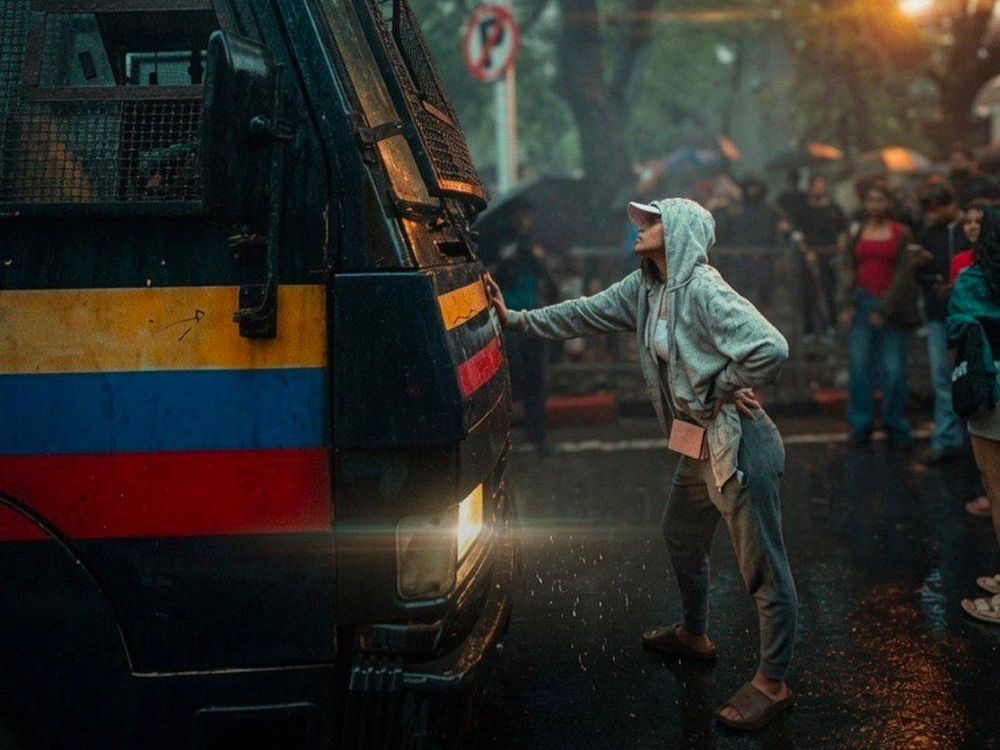
The now-iconic photograph, captured by Indra Joshi, shows Rhiya standing in rain before a police vehicle filled with unarmed student protesters. While the image has traveled globally as a symbol of youthful courage, Rhiya frames her actions through simpler terms: family upbringing.
"I was there as a citizen of India who wants to stand up against something that is wrong. That is what I've been raised as in my family. Our parents always tell us, if something is unjust, stand up for it."
Her father served in the Indo-Tibetan Border Police, one of India's five Central Armed Police Forces with approximately 90,000 personnel guarding the 3,488-kilometer Indo-China border. Multiple extended family members continue serving in the armed forces. Before injuries ended those plans, Rhiya herself briefly considered military service.
Before leaving for the protest, she told her father she thought the demonstration had been cancelled. His response stayed with her: "What if it's cancelled? People are still going to show up. Go."
The photograph that sparked global attention
The image that made Rhiya recognizable worldwide almost made her laugh when friends first sent it. "When my friends first sent me the picture, I was like, 'What is that pose?'" she recalls with a smile.
Online critics questioned whether the photograph appeared too polished or theatrical. Rhiya offers a straightforward explanation: she had injured her knee during gymnastics the previous day and couldn't stand straight. "I think every girl stands like that," she says.
A theatre performer since age four and a model for six years, Rhiya credits her stage experience with helping her remain composed during a moment that would enter history. Like other iconic protest images that have galvanized social movements throughout history, the photograph resonated beyond its immediate context.
Social media amplified the image's reach exponentially. Research shows that protest imagery shared on platforms like Twitter and Instagram now reaches millions within hours, compared to traditional media cycles that once required days or weeks for similar distribution.
Documentation as resistance
Fame has been far from Rhiya's priority. "If I've been blessed with this beautiful platform, I want to make the most of it," she states. "We're not even demanding. We're just asking for our rights."
The sudden attention brought criticism, with some accusing her of seeking social media fame. She dismisses these claims, noting she spent much of the protest documenting events, photographing number plates, and recording videos. "Documentation is very important in today's time," she emphasizes.
Why has the single photograph resonated with millions? Rhiya believes the answer lies in universal emotion. "I think all of us have felt alone at some point in life," she reflects. "There I was, standing there alone. People recognised that they themselves also have a voice. They just have to muster up the courage."
That message carries particular weight given India's youth demographic. With approximately 27% of the population aged 15-29—representing over 380 million people—India possesses the world's largest youth demographic and an increasingly significant political force.
Standing ground
Would she do it again? She doesn't hesitate. "It's muscle memory to stand up for what's right," she says, recalling how she once challenged a security guard for speaking disrespectfully to a rickshaw driver. "Everyone deserves respect."
Her message to young people, especially women, remains direct: "Stand your ground. Your voice matters. Every voice matters."
Even after her image became synonymous with student resistance, Rhiya returns to the same refrain. "I will keep saying it. I am not the face of it. The students are. Justice for them should prevail and shall."
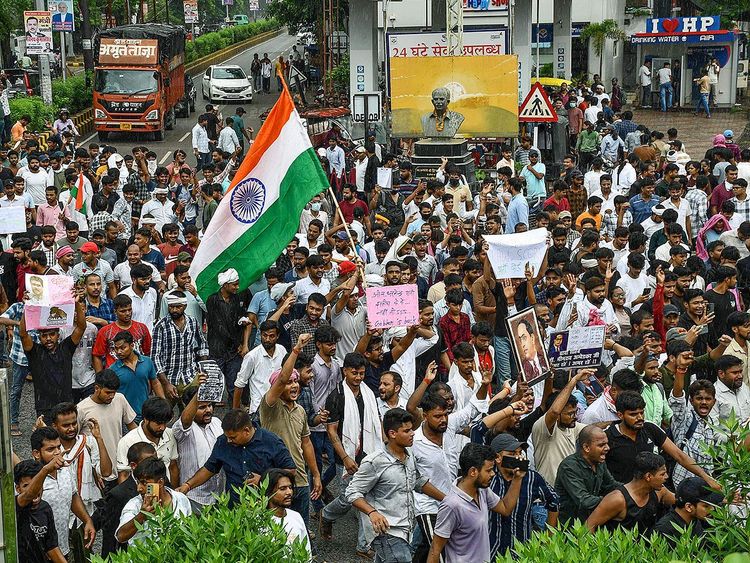
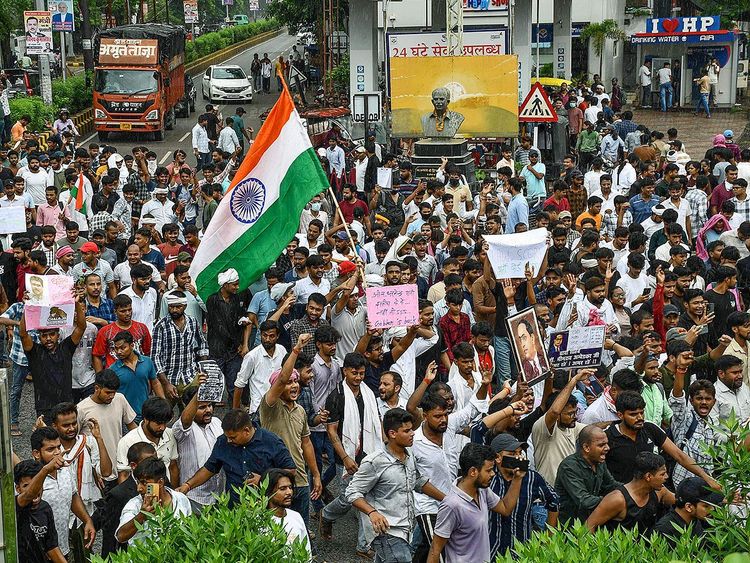
The protests center on controversies surrounding NEET, India's National Eligibility cum Entrance Test—the country's single largest medical entrance examination. With over 2.4 million students appearing for the exam in 2024, it ranks among the world's most competitive medical entrance tests, making the stakes for reform exceptionally high.
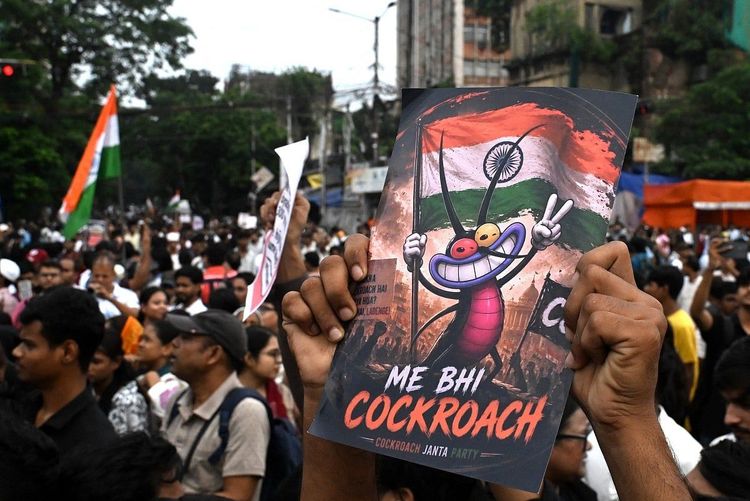
As celebrations over Pradhan's resignation continue, Rhiya's words serve as reminder that for the protesters, this represents progress rather than conclusion. The question now shifts to whether the next education minister will address the concerns that drove hundreds of thousands into the streets—and whether India's massive youth population will maintain pressure for the systemic changes they demand.