UAE job market transformation: 87% of roles to see rising demand as AI reshapes work
Ministry of Higher Education data shows demand will increase for most existing UAE jobs while one in five future positions will be entirely new roles created by AI and automation.
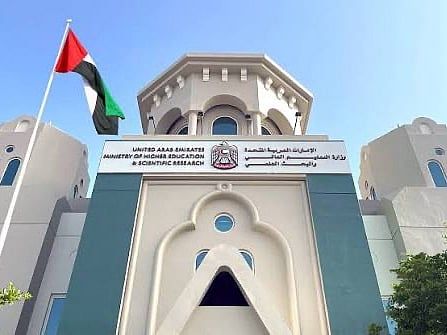
UAE job market transformation: 87% of roles to see rising demand as AI reshapes work
The UAE's Ministry of Higher Education and Scientific Research has identified a sweeping transformation across the country's industrial and energy sectors, with demand set to rise for 87 per cent of existing jobs while routine administrative roles face decline. The shift highlights the urgent need to invest in workforce development and equip Emirati talent with skills aligned to the future economy.
According to the ministry's Emirates Skills indicators, the UAE's labour force of approximately 7.09 million workers is experiencing change driven by artificial intelligence and the Fourth Industrial Revolution — a transformation characterised by unprecedented speed, broad scope across industries, and deep impact on production and management systems.
Demand is expected to climb particularly for advanced engineering and sales roles, reflecting growing requirements for professionals capable of supporting technological and economic change. Meanwhile, 20 per cent of future jobs are projected to be entirely new positions, including robotics operations supervisors, AI systems quality assurance technicians and manufacturing engineers.
Robotics operations supervisors, for instance, will lead daily operations in automated facilities, train staff on robotic systems, ensure compliance with safety standards and coordinate routine robotics tasks while managing teams operating automated equipment.
Administrative roles under pressure
The ministry found that 13 per cent of current jobs are considered stagnant, largely covering routine administrative, support and office functions increasingly affected by digital transformation and automation. The UAE ranked fourth globally in ICT infrastructure in the 2024 Global Knowledge Index, demonstrating the technological foundation enabling this shift.
The findings reinforce the importance of aligning education outcomes with labour market needs and strengthening investment in future-ready skills to support the UAE's competitiveness in the knowledge economy. The ministry operates under a regulatory framework guided by Federal Decree-Law on Higher Education and Scientific Research, focusing on aligning education outcomes with national economic needs through progressive policies and strategic partnerships.
Sector-specific approach
The ministry has established eight working groups under the Advisory Committee for Higher Education and Future Skills, including a Sustainable Energy and Water Working Group that focuses on aligning education with future job needs in energy and water sectors specifically mentioned in the latest indicators.
The UAE Labour Market Observatory, managed by the Ministry of Human Resources and Emiratisation, provides periodic data on labour market competitiveness indicators designed to position the UAE's labour market as a regional and international leader.
The transformation mirrors global trends. World Economic Forum data indicates over 80 per cent of businesses worldwide expect technology to fundamentally reshape operations by the end of the decade. While automation may eliminate certain jobs, it also creates new roles requiring advanced technical and soft skills.
Competitive foundation
The labour market evolution unfolds as the UAE ranked fifth globally in the IMD World Competitiveness Yearbook 2026, retaining its position among the world's most competitive economies and extending its lead in the Middle East region. The country also ranked first globally in 10 key labour market and employment indicators in 2025, including low labour disputes, workforce growth, employment rate and availability of international experience, according to the IMD World Competitiveness Center.
The ministry said the findings underscore the need to accelerate alignment between education systems and evolving economic requirements, ensuring Emirati professionals remain positioned for success as technology continues reshaping the workplace.