Abu Dhabi Hafilat card: Complete guide to costs, free travel and usage
Understanding Abu Dhabi's Hafilat smart card system, from purchasing and pricing to free travel permits for students, seniors and people of determination.
Types of Hafilat cards available
Navigating Abu Dhabi's public transport network begins with the Hafilat smart card, a contactless payment system that has become essential for anyone using the emirate's bus services. Since its introduction in 2015 by the Integrated Transport Centre, the card has replaced cash payments entirely, making bus travel faster and more efficient across Abu Dhabi.
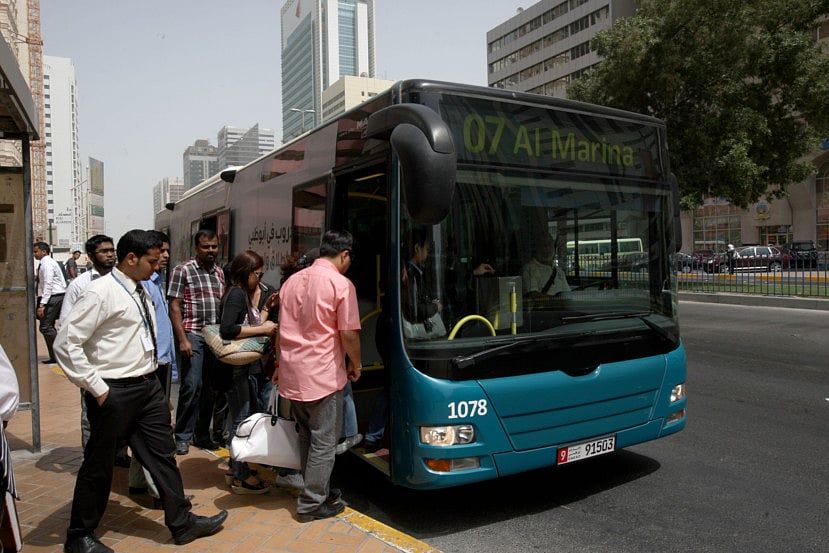
The Hafilat card allows passengers to pay for bus journeys by tapping their card when boarding and alighting, with fares automatically calculated based on distance travelled. Cash payments are not accepted on Abu Dhabi buses, making the card a necessity rather than a convenience for all residents and visitors using the public bus network.
The card system is managed by Abu Dhabi Mobility, which rebranded from the Integrated Transport Centre in 2024 with an expanded mandate covering land transport, aviation and maritime operations. The organisation operates under the Department of Municipalities and Transport. In 2024 alone, Abu Dhabi's public transport network recorded over 90 million bus rides, demonstrating the scale and importance of the system.
Types of Hafilat cards available
Two main card options are available to passengers, each offering different features and benefits.
The Anonymous Hafilat Card costs Dh10 and is valid for 16 years. It can be obtained without any prerequisites and allows passengers to pay for public transport. However, as the card is anonymous, it does not offer balance transfer in the event of damage or loss unless linked to a UAE identity card.
The Personalised Hafilat Card is free and valid for 16 years. It requires an Emirates ID card for residents, or passport and visa for visitors, plus a personal photo that can be taken at customer happiness offices at bus stations. This card offers additional services including balance transfers in case of damage or loss, the ability to add transport passes, and access to subsidised annual permits for eligible groups.
It is worth noting that unlike Dubai's Nol card system, the Hafilat card is specific to Abu Dhabi's transport network. Both are contactless smart cards used for public transport in the UAE, but each is designed for a different emirate and they cannot be used interchangeably.
Free annual permits for eligible groups
Several groups qualify for free or subsidised annual permits through the Personalised Hafilat Card system.
The Student Permit costs Dh500 annually and provides eligible students with unlimited free trips within Abu Dhabi city and its suburbs, Al Ain and Al Dhafra. Applicants must provide a valid Emirates ID card, a personal photo and valid documentation proving student status.
The Senior Permit is completely free for residents and citizens aged 55 and above. It offers unlimited free trips within the same coverage areas for one year. Applicants need a valid Emirates ID card and a personal photo.
The People of Determination Permit is also free and includes a no-charge companion permit for one year. Cardholders receive unlimited free trips within Abu Dhabi city and its suburbs, Al Ain and Al Dhafra. Applicants must provide a valid Emirates ID card, personal photo, an Aounak Card or People of Determination Card, and a medical report for temporary cases. The companion must hold a Personalised Hafilat Card.
Transport passes for regular travellers
For passengers who do not qualify for annual permits, two pass options provide unlimited travel within city and suburban areas.
The 30-Day Pass costs Dh95 and allows unlimited trips within Abu Dhabi city, Al Ain and Al Dhafra and their suburbs for 30 days from the date of purchase. Intercity services are not included. Passengers must hold either an Anonymous or Personalised Hafilat Card to purchase this pass.
The Seven-Day Pass costs Dh35 and offers the same coverage for seven days from the date of purchase. Intercity services are also excluded from this pass.
Where to buy and recharge cards
Hafilat Smart Cards can be purchased at major bus stations, ticket vending machines and selected retail partners across Abu Dhabi. Cards are available from customer happiness offices and ticket counters at main bus stations, including Abu Dhabi Central Bus Station, and at Abu Dhabi International Airport Terminal 1.
Ticket vending machines are located at major bus stops, transport hubs and selected malls including Abu Dhabi Mall and Yas Mall. Selected retail outlets also sell the cards, including Lulu Hypermarket and Lulu Exchange locations.
Passengers can recharge their cards through the TAMM app, sales and recharge machines at bus stations and bus stops. The Hafilat card is fully integrated with Abu Dhabi's digital transport ecosystem, allowing users to track their balance, recharge online, set up auto-top-ups and view travel history through the official DARB portal or smart mobility platform. The balance is reflected on the card immediately after recharging.
How to use the card
Using a Hafilat card requires passengers to tap on and off during each journey. Before boarding, passengers should check their card validity and ensure sufficient balance for at least one trip. When boarding the bus, tap the card on the reader. When leaving the bus, tap the card on the reader again and check the remaining balance.
The fare is calculated based on the distance travelled between boarding and alighting points. Passengers must remember to tap both when boarding and when leaving the bus. Failure to tap out when alighting will result in the full amount of the bus journey being automatically deducted upon the next use. This also applies when making a transfer.
Abu Dhabi's transport evolution
Modern bus services in Abu Dhabi began in 2008 with the gradual deployment of 258 buses in June of that year. The network expanded significantly, with plans to reach 1,360 buses by the end of 2010 to provide comprehensive coverage within cities.
The emirate continues to invest in sustainable transport infrastructure. Abu Dhabi has unveiled a strategy to become a Public Transport Green Zone by 2030 by converting half of its public transport fleet to hydrogen and electric-powered buses through its Green Bus Programme. The emirate has also set a broader goal for electric vehicles to comprise 50 percent of all cars by 2040, with Abu Dhabi Mobility facilitating the installation of 1,000 electric vehicle charging stations at 400 locations across Abu Dhabi Island, Al Ain and the Al Dhafra Region.