Car bomb kills Libya's top intelligence chief in Benghazi attack
Fawzi al-Mansouri, head of military intelligence for eastern Libya's forces, was killed in a car bombing outside a mosque in Benghazi, dealing a blow to security in the region and threatening to derail US-led reunification efforts.
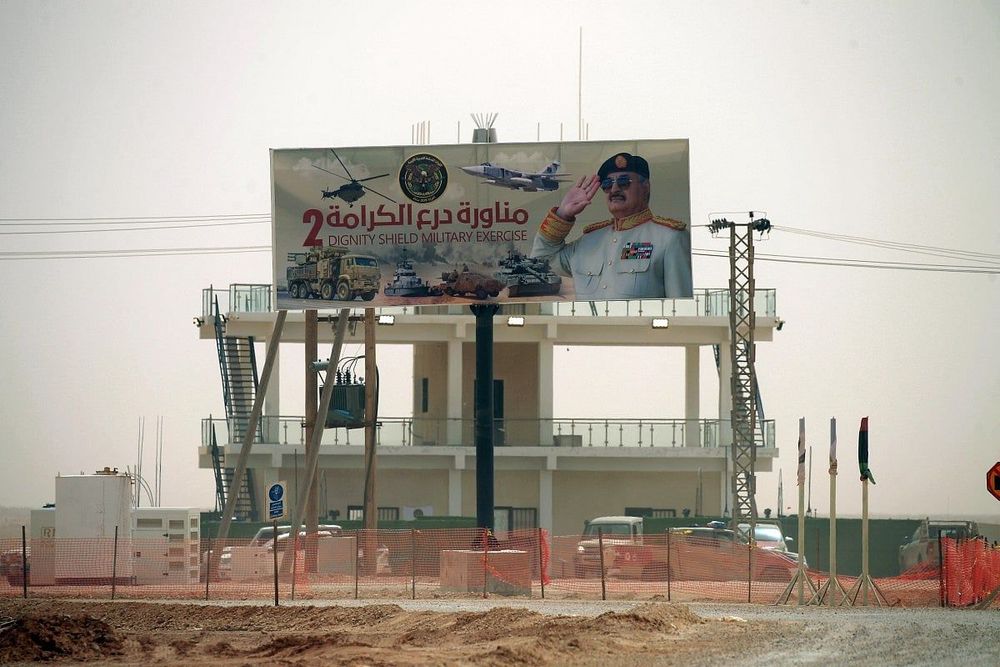
Car bomb kills Haftar intel chief in eastern Libya
The head of military intelligence for the Libyan National Army was killed in a car bombing in Benghazi on Monday, raising fears that the attack could undermine recent progress toward reunifying the divided North African nation.
Fawzi al-Mansouri died when an explosive device attached to his vehicle detonated as he was leaving a local mosque at night, the LNA said in a statement late Tuesday. The attack targeted one of the most senior figures in the eastern military command led by Khalifa Haftar.
The assassination occurred in Benghazi, the stronghold of the LNA, which controls eastern Libya and more than 85 percent of the country's territory, including strategic oil-producing regions. The killing represents a significant security breach in an area the Haftars have portrayed as stable.
Khaled Haftar, son of the LNA commander, announced an investigation was underway and said indicators point to a terrorist operation. No group has claimed responsibility for the attack.
Threat to reunification efforts
The bombing comes at a critical moment for Libya, which in April reached agreement on a unified national budget for the first time since 2013. That breakthrough, achieved through US-brokered mediation, was seen as a major step toward ending years of institutional division.
The reunification plan, led by Massad Boulos, President Trump's adviser on Arab and Middle Eastern affairs, would see current Prime Minister Abdulhamid Dbeibah remain in his post while Saddam Haftar, Khalifa's son, would head a reformed Presidential Council.
Hamish Kinnear, an analyst with Verisk Maplecroft, said the attack was a major blow to the LNA's security credentials. The intelligence required to successfully target such a high-profile figure indicates significant capabilities on the part of those responsible, he noted.
Libya expert Jalel Harchaoui said the killing would likely disrupt or delay the US-backed agreement. The reunification plan rests on the premise that security reigns in Benghazi and that loyalty to Saddam Haftar guarantees protection for senior officers in the eastern stronghold, he explained.
Political divisions deepen
Libya has remained fractured since the 2011 uprising that ended Muammar Gaddafi's four-decade rule. The country's division became institutionalized in 2014 when violence escalated after a general election, splitting the nation geographically between eastern and western halves, each with rival governments backed by foreign powers and armed groups.
Two governments currently compete for power: the UN-recognized administration in Tripoli led by Dbeibah, who was appointed in February 2021 and has remained in office despite the indefinite postponement of elections originally scheduled for December that year, and a rival government in Benghazi backed by Haftar's forces.
The UN Security Council has warned that Libya's political situation is deteriorating amid further fragmentation of state institutions, with competing mandates and conflicting rulings from courts in Benghazi and Tripoli undermining the judicial system.
Legacy of anti-jihadist operations
Al-Mansouri was a prominent military leader with close ties to the Haftar family. He played a key role in the LNA's operations against jihadist groups, including the Islamic State, between 2014 and 2017 in eastern Libya. The LNA launched Operation Dignity in May 2014 in Benghazi, targeting Islamist factions including Ansar al-Sharia as part of Haftar's campaign to reclaim the east from militant control.
He was also a leading figure during Haftar's Russia-backed offensive to seize Tripoli in 2019, which was repelled by forces in the capital with Turkish support.
The Tripoli-based government condemned what it called a terrorist attack against al-Mansouri, saying it opposed the killing regardless of political positions or alliances.
Khaled Haftar's office later announced authorities had arrested a terrorist cell in Benghazi preparing to carry out acts of sabotage, though it did not confirm any connection to the assassination.
Authorities held al-Mansouri's funeral on Tuesday afternoon in Benghazi, with senior LNA officials including Khaled and Saddam Haftar in attendance. The LNA described him as a heroic martyr.
Libya's instability carries significance beyond its borders. The country holds Africa's largest proven oil reserves and serves as the primary departure point for irregular migration to Europe, making the security situation a matter of regional and international concern.