Philippines launches $1 billion EV push as fuel savings drive adoption amid infrastructure gaps
Manila unveils massive incentive package to attract electric vehicle manufacturers and boost local production, while consumers weigh lower running costs against charging, repair and resale concerns.
Operating costs offer compelling savings
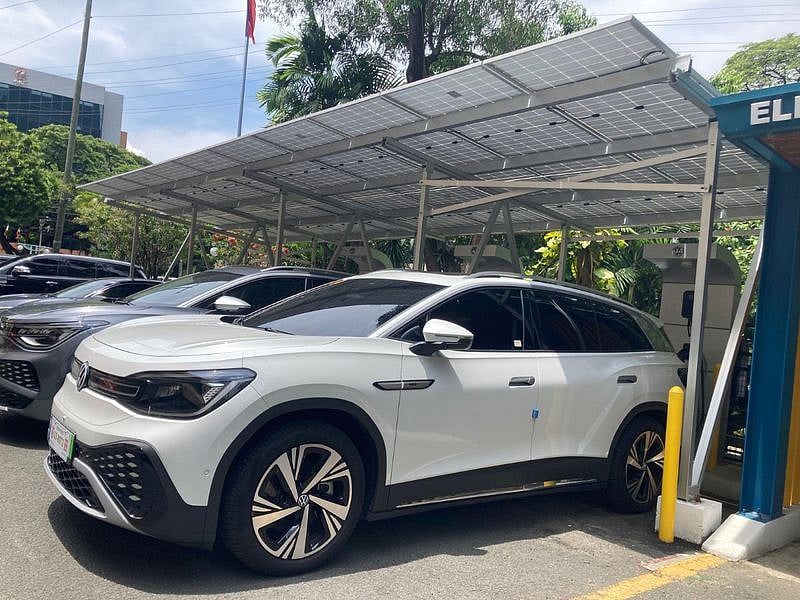
For Filipino motorists, the strongest case for switching to electric power may be what it costs to keep the vehicle running. Electric vehicles generally deliver lower energy and maintenance expenses compared with gasoline or diesel-powered cars. Multiple Filipino bloggers report energy costs of roughly ₱2 per kilometre for EVs, compared with approximately ₱7 to ₱8 per kilometre for conventional internal-combustion engine vehicles.
That gap accumulates quickly for drivers covering long distances. Electric vehicles also contain fewer moving mechanical components than conventional vehicles, potentially reducing spending on engine oil, spark plugs and other routine maintenance. Those savings become increasingly attractive as fuel prices remain unpredictable.
EV sales in the Philippines surged 132.7 percent year on year to 31,381 units in the first half of 2026, while sales of conventional vehicles dropped 11.4 percent. The increase suggests Philippine consumers are beginning to evaluate total cost of ownership rather than focusing solely on sticker price. But that calculation involves more than fuel savings alone.
Three barriers slowing consumer adoption
Consumers may recognise potential savings, but significant concerns about EV ownership persist. E-mobility consultant Abhishek Sinha identified three major obstacles: charging infrastructure, ease of repair—particularly battery repairs—and resale value. Those concerns carry particular weight in a country where the EV ecosystem remains relatively underdeveloped.
For motorists without home charging capability, owning an EV can prove considerably less convenient than a gasoline-powered car. The Philippines has expanded its charging network, but infrastructure remains unevenly distributed, especially outside major urban centres. This creates a familiar problem: consumers hesitate to buy EVs until charging becomes widespread, while investors remain cautious about building charging stations until sufficient EVs exist to make them commercially viable.
The infrastructure challenge is compounded by electricity costs. The Philippines recorded the highest average residential electricity rate in Southeast Asia at ₱12.43 per kilowatt-hour in June 2026, surpassing even Singapore. Supply constraints and forced plant outages in the Visayas region drove the increase, underscoring power infrastructure challenges that affect both EV charging economics and manufacturing competitiveness.
Battery repair represents another new ownership anxiety. While consumers have decades of experience with local mechanics and parts for conventional vehicles, EVs present different challenges. The battery is among the most expensive EV components, and consumers remain uncertain about what happens when it degrades or fails. Questions about battery warranties, replacement costs, diagnostic expertise and parts availability can influence purchase decisions as much as advertised fuel savings. The prospect of facing a large battery-repair bill years after purchase can undermine arguments that electric cars cost less to own over time.
Resale value uncertainty adds another layer of concern. The Philippine used-car market is overwhelmingly built around conventional vehicles, giving buyers and dealers years of historical pricing data. The EV market lacks comparable depth. Rapid improvements in battery technology and new EV models could also accelerate depreciation of older vehicles. For buyers viewing a vehicle as a major household asset, that uncertainty can outweigh years of fuel savings.
Supply-side strategy faces regional competition
The government's EV incentive strategy targets the problem from the supply side. Energy Secretary Sharon Garin argued the Philippines should not merely consume EVs but build them, estimating domestic production could reduce retail prices by as much as ₱200,000 per vehicle. That would directly address one of the biggest adoption barriers: high upfront costs.
The Philippines starts from behind, however. Unlike Thailand and Indonesia, which spent decades building automotive supply chains, the country remains heavily dependent on imported completely built-up vehicles. Its domestic components industry is relatively limited, while low production volumes make it difficult to achieve economies of scale enjoyed by regional competitors.
Thailand's automotive industry sources approximately 80 percent of vehicle components locally, supported by around 720 Tier 1 suppliers and over 1,100 Tier 2 and Tier 3 suppliers. Thailand produced 70,914 battery-electric cars in 2025. Indonesia has attracted over $30 billion in investment for its nickel-based EV battery ecosystem, becoming the world's largest nickel producer with over 50 percent of global output after banning raw nickel ore exports in 2020 to force domestic processing. In June 2025, Indonesia inaugurated a $5.9-billion integrated EV battery supply chain project called Dragon, a joint venture between state-owned companies and Chinese battery giant CATL covering nickel mining to battery manufacturing.
Indonesia's government aims to establish an integrated EV battery supply chain with an estimated $121 billion in investment opportunities by 2045, targeting to rank among the top five EV battery producers globally. Vietnam's VinFast produced 200,000 electric vehicles at its Hai Phong plant in 2025 alone, achieving best-selling automotive brand position in Vietnam while establishing additional manufacturing facilities in Ha Tinh, India and Indonesia.
The Philippines is attempting to compress decades of industrial development into a much shorter period, despite policy setbacks. The country attempted to implement a raw nickel ore export ban in 2024 to emulate Indonesia's strategy, but the ban clause was removed from legislation in June 2025 due to concerns about insufficient domestic midstream and downstream processing capacity.
Manufacturer response remains cautious
Response from major manufacturers has been mixed. Mitsubishi Motors Philippines announced a ₱7-billion investment to assemble hybrid EVs at its Santa Rosa, Laguna plant, with production targeted for mid-2028. Other manufacturers have yet to commit. BYD, which dominates the Philippine EV market through Ayala's ACMobility, indicated local assembly is not currently part of its plans. Toyota said it remains open to the government's programme.
Beyond tax credits, automakers need reliable suppliers, competitive electricity prices, skilled labour, efficient logistics and sufficient demand to justify billions of pesos in capital spending.
Carving out a competitive niche
Analysts suggest Manila does not necessarily need to replicate Thailand or Indonesia. Instead, it could focus on areas where it holds potential advantages. The country could position itself as a regional centre for commercial and light-duty EV assembly while developing its role in the battery supply chain.
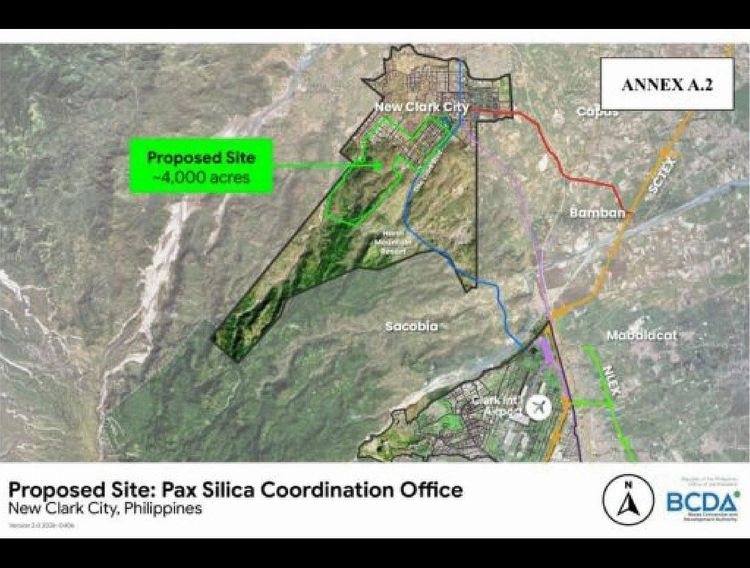
The Philippines ranks second globally in nickel production, accounting for approximately 10.3 percent of world output in 2023, behind only Indonesia. This gives it a potential foothold in battery materials. Management consultancy Arthur D Little estimated that developing downstream nickel processing and cathode production could attract up to $2 billion in foreign direct investment. The opening of the country's first EV battery plant in New Clark City, Tarlac offers an early indication of that potential. Australia's StB Giga Factory is targeting annual production of 2 gigawatt-hours by 2030.
Beyond the billion-dollar investment
The government's ₱60-billion package is substantial, but money alone cannot create an EV ecosystem. The country needs to build the infrastructure and supply chains that make EVs more affordable, easier to charge, easier to repair and easier to sell later. For consumers, the equation is already becoming attractive: an EV can potentially save thousands of pesos annually in fuel and maintenance. But those savings must be weighed against purchase price, charging convenience, battery risks and uncertain resale value.
Whether that strategy succeeds may depend less on how much the government spends than on whether consumers finally believe an EV is not only cheaper to run, but also practical to own.