Canada vows retaliation as Trump imposes unprecedented 50% tariffs
Prime Minister Mark Carney announces dollar-for-dollar countermeasures after rejecting US demands that would limit Canada's sovereignty in trade negotiations.
Canada vows retaliation as Trump imposes unprecedented 50% tariffs
Canada has pledged to retaliate against sweeping new US tariffs after Prime Minister Mark Carney walked away from negotiations late Friday, concluding that Washington was demanding too much in exchange for tariff relief.
The United States imposed 50 percent duties Saturday on approximately $20 billion worth of Canadian goods. Carney responded by announcing dollar-for-dollar retaliation beginning September 8.
"We're going to hit back," Carney declared, making Canada the first major American ally to choose economic pain over capitulation to President Donald Trump's tariff pressure.
Sovereignty at the centre of breakdown
The confrontation escalated when Washington introduced language in the final hours of negotiations that would have restricted Canada's ability to make independent trade deals with other countries. Carney called the demand "unacceptable" and "a question of sovereignty."
British Columbia Premier David Eby said accepting such conditions would have reduced Canada "to the economic equivalent of the 51st state," a status Trump has frequently suggested for Canada.
Trump invoked Section 338 of the Tariff Act of 1930 to impose the duties, marking the first use of this provision by any president since it became law nearly a century ago. The move represents a dramatic departure from the United States-Mexico-Canada Agreement, which entered into force in July 2020 and established the framework for North America's integrated trade zone.
High stakes for asymmetric partners
The economic risks are substantial and unequal. Roughly three-quarters of Canadian merchandise exports go to the United States, representing almost one-quarter of Canada's GDP. By contrast, trade with Canada accounts for only about 3 percent of the US economy.
In 2024, nearly $420 billion in Canadian goods crossed south, with approximately $3.6 billion in bilateral trade flowing daily between the two countries. Carney acknowledged that retaliation would "raise costs and reduce choice for Canadians."
Yet polling suggests domestic support for resistance. A Léger survey from August showed 56 percent of Canadians want the federal government to make no further concessions to Washington, compared to 31 percent favouring flexibility.
Carney's defining test
The standoff represents a crucial early test for Carney, who became Canada's 24th Prime Minister in March 2025 after being elected Liberal Party leader despite having no prior experience in elected office.
Before entering politics, Carney built an international reputation in economic crisis management. He served as Governor of the Bank of Canada from 2008 to 2013, guiding the country through the global financial crisis by cutting interest rates months before other central banks followed suit. Canada's banking system weathered that storm better than other G7 nations.
He then became Governor of the Bank of England from 2013 to 2020, the first non-Briton to hold that position since the institution's founding in 1694. Prior to public service, Carney spent thirteen years at Goldman Sachs, rising to managing director and advising on major financial matters including Russia's 1998 crisis.
A test case for middle powers
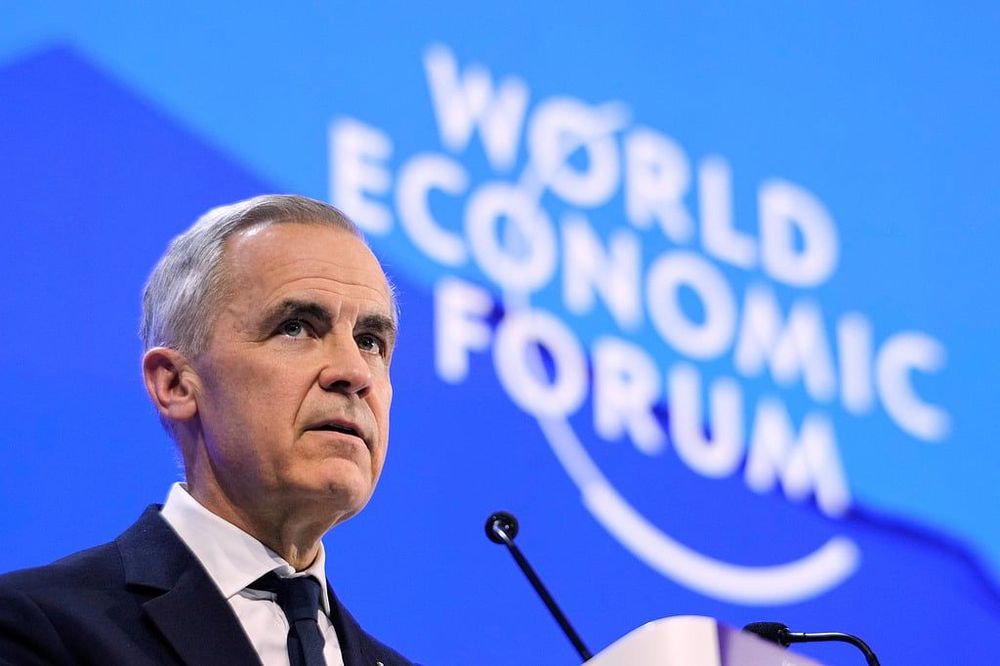
In January, Carney told the World Economic Forum in Davos that the international order was experiencing "a rupture, not a transition." He warned that middle powers negotiating alone with great powers do so from weakness and must be prepared to "withstand pressure."
Trump responded a day later: "Canada lives because of the United States. Remember that, Mark, the next time you make your statements."
Saturday's events mark the latest escalation in a trade conflict that began in February 2025, when Trump first announced sweeping tariffs including 25 percent on most Canadian imports and 10 percent on energy products. Canada initially imposed retaliatory tariffs on $30 billion worth of US goods, which grew to $155 billion within three weeks.
"Our government understood, before many, that America would transform all its commercial relationships," Carney said Saturday. He accused Washington of using "economic integration as a weapon" and said its "signature was written in pencil."
US Trade Representative Jamieson Greer disputed Canada's account, saying Ottawa introduced new demands and backed away from commitments even after Washington offered reduced tariffs on steel, automobiles, lumber and other goods. He said the United States would proceed with additional measures in response to Canada's retaliation.
Historian Robert Bothwell said Canada faces unique vulnerability. "No country is more exposed than Canada," he noted, adding that success ultimately means retaining independence "in the face of Trump's desire to subordinate it and absorb it."
Manitoba Premier Wab Kinew urged Canadians to prepare for a prolonged fight, suggesting Trump could emerge weakened after US midterm elections in November. "He's got two more years left in office. We should be prepared to duke it out for two years, and then hopefully, sanity will return."
For Carney, the moment represents both risk and opportunity. "Last spring, I warned that America is trying to break us so that they can own us," he said Saturday. "And I promised: 'That will never, ever happen.' We are keeping that promise."