ICC condemns US sanctions against president and prosecutor as attack on judicial independence
The International Criminal Court has denounced the latest US sanctions targeting its president Tomoko Akane and senior prosecutor Abdoulaye Seye, vowing to continue its mandate despite an unprecedented wave of withdrawals by member states.
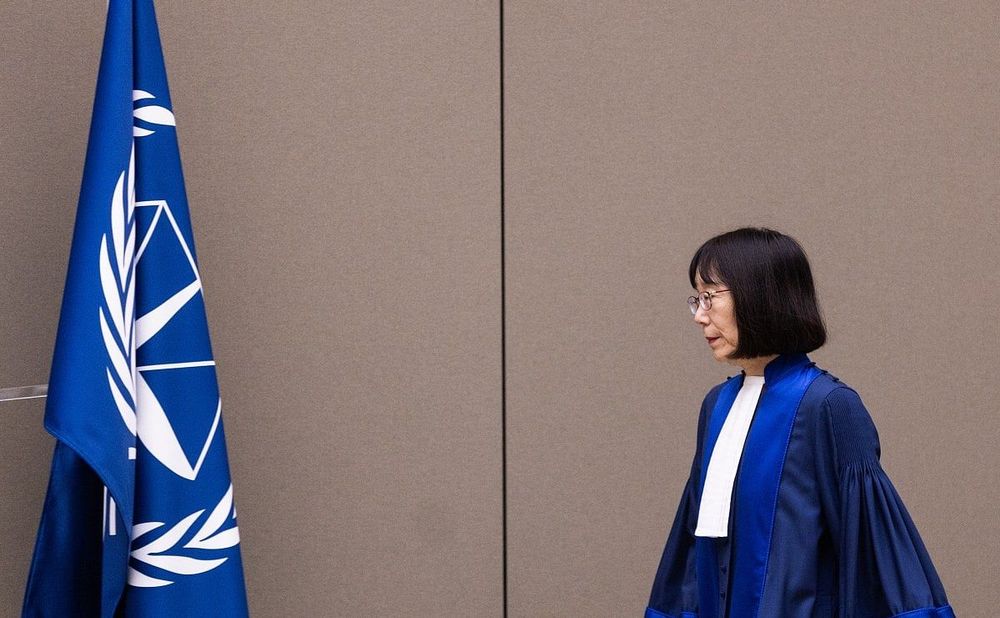
ICC condemns US sanctions against president and prosecutor as attack on judicial independence
The International Criminal Court condemned US sanctions imposed on its president and a senior prosecutor on Wednesday, calling the measures a direct assault on the tribunal's independence as the court faces the most severe crisis in its history.
The State Department announced Tuesday that it had imposed sanctions on ICC President Tomoko Akane, a Japanese national, and senior trial lawyer Abdoulaye Seye from Senegal. The sanctions freeze any assets they hold in US jurisdictions and block their access to the American financial system.
Akane, who was elected ICC president in March 2024 for a three-year term, became the first Japanese national to hold the position. She has served as an ICC judge since 2018 after a 30-year career as a public prosecutor in Japan.
The Trump administration has now sanctioned nine of the court's 18 judges, both deputy prosecutors, the former chief prosecutor, and one other prosecution staff member, according to the ICC.
In a statement, the court said that when judicial actors face threats for applying the law, the entire international legal order is placed at risk. The court pledged to continue discharging its mandate with full independence and impartiality.
Unprecedented pressure campaign
Secretary of State Marco Rubio branded the ICC a corrupt and politicized institution that has exceeded its mandate. The sanctions came weeks after Rubio announced a sweeping campaign to dismantle what he called the court's threat to US sovereignty.
Rubio said the United States will pressure the court's 125 member states to withdraw from the institution, sanction organizations working with the court, and ban staff from entering the United States.
The US accuses the court of overstepping its authority by investigating senior military and political officials from countries such as Israel and the United States. The ICC can exercise jurisdiction over crimes committed on member state territory, by nationals of member states, or when the UN Security Council refers situations—even involving non-member countries.
Chad's Foreign Ministry confirmed that its decision to withdraw from the ICC followed a direct request from the United States government, with the US Deputy Secretary of State for African Affairs asking the country to reconsider its court membership.
Wave of withdrawals threatens court
Venezuela and Chad recently announced plans to leave the court, bringing to five the number of countries that have moved to withdraw in the past year. It takes one year for a withdrawal to be formalized under ICC procedures.
Prior to this surge, only Burundi in 2017 and the Philippines in 2019 had formally withdrawn from the ICC since its establishment in 2002 following adoption of the Rome Statute in 1998. The court operates as a last resort to prosecute war crimes, crimes against humanity, genocide, and aggression when national authorities fail to provide accountability.
In September 2025, Burkina Faso, Mali, and Niger announced their collective withdrawal from the ICC, labeling it an instrument of neo-colonialist repression and accusing the court of disproportionately targeting African and less privileged countries.
Venezuela is currently under ICC investigation for alleged crimes against humanity committed during crackdowns on protesters since 2014. The investigation will continue despite Venezuela's withdrawal, as withdrawal does not halt cases already underway.
Not all withdrawal attempts have succeeded. Hungary announced its withdrawal in June 2025 but reversed the decision in May 2026, just days before it would have taken effect, after a new government was elected and revoked the withdrawal through parliamentary action.
International response
Japanese Prime Minister Sanae Takaichi called the sanctions very unfortunate and said Japan would respond while maintaining communication with the United States and other countries.
The Assembly of States Parties, the ICC's management oversight and legislative body composed of representatives from all 125 member states, called the sanctions an escalation that risks undermining ongoing investigations and impeding global efforts to ensure justice for victims of atrocities.
The sanctions can significantly impact the daily lives of court officials, preventing them and their families from entering the United States and blocking access to financial services. Canadian judge Kimberly Prost, sanctioned last year, lost access to her credit cards and found that even Amazon's Alexa stopped responding to her commands.
ICC host nation the Netherlands and Germany both voiced support for the court. German foreign office spokesman Martin Giese said the ICC is fulfilling its mission exactly as intended by holding perpetrators of grave crimes to account. Dutch Foreign Minister Tom Berendsen invited Akane for talks to discuss continued support.
Human Rights Watch called the sanctions the latest example of the Trump administration's contempt for international law and a naked attempt to shield American and Israeli officials implicated in serious crimes from justice. The organization and three other advocacy groups sued the Trump administration in a New York court last week to challenge its campaign against the ICC.
As of July 2024, the ICC has charged 64 individuals with war crimes, crimes against humanity, or genocide, with 11 convicted and 32 still at large. The court focuses on senior officials responsible for crimes at a high level.