Iran bets control of Strait of Hormuz will force US capitulation
Tehran believes military pressure on the vital waterway and depleted US weapons stockpiles will compel Washington to accept Iranian terms, though the strategy carries significant economic and political risks.
Iran bets Strait of Hormuz leverage will force US to yield
The Strait of Hormuz takes its name from Ahura Mazda, the supreme deity in Zoroastrianism who represents light, wisdom and order in eternal opposition to darkness and chaos. The name passed through Middle Persian forms—Hormozd and Ohrmazd—before becoming associated with the narrow waterway that now sits at the center of a geopolitical standoff.
Iran's leaders believe their own victory in that standoff is within reach, and they are wagering that military pressure will ultimately force the United States to accept their control over the crucial global energy chokepoint.
Tehran's calculation rests on several factors it views as advantageous. Iranian officials are aware that US stockpiles of advanced missile interceptors have been severely depleted. Patriot interceptor inventories have fallen from approximately 2,200-2,300 before the conflict to fewer than 1,000, while THAAD interceptors dropped from around 450-530 to roughly 234-278, according to estimates from the Center for Strategic and International Studies. Replenishing these systems will take years, with SM-3 interceptors requiring up to 64 months to build, test and deliver, while other munitions need a minimum of 42 months.
Iranian strategists also understand the conflict's unpopularity among Americans and know that as long as the strait remains largely closed, prices for fuel and other goods will stay elevated ahead of US congressional elections in November. They recognize that forcing the waterway open militarily would be costly and might require American ground troops. And they know their Houthi allies in Yemen could expand the war and disrupt another major trade route.
By this logic, President Donald Trump has little choice but to yield.
An emerging deal that would formalize Iranian control
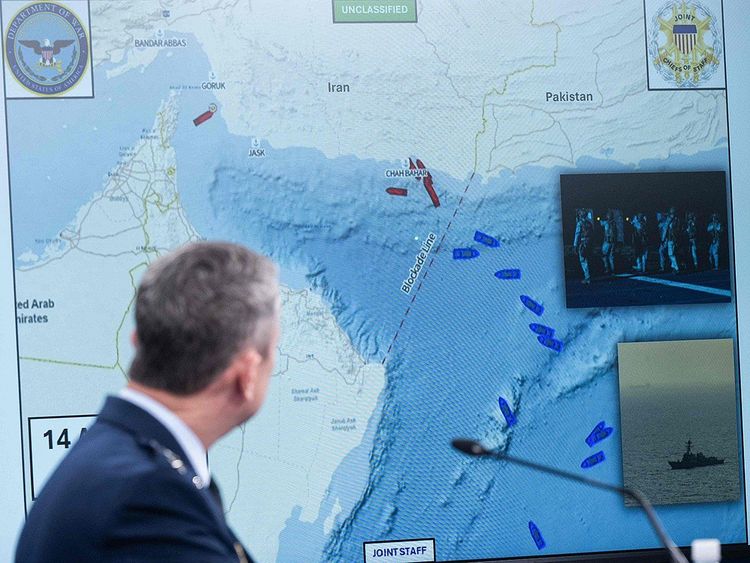
Iran has indicated it is close to reaching an agreement with Oman to manage the strait, which at its narrowest point is approximately 21 nautical miles wide, with shipping lanes running through both Iranian and Omani territorial waters. However, any arrangement would be conditional on the US lifting its blockade, meaning Trump would need to approve even if no direct negotiations are occurring, as Iran maintains.
Whether the deal would allow Iran to charge transit fees remains unclear. But it would formalize Iranian control over what had been an open international waterway before the war—one that in 2025 carried approximately 25% of global oil trade and 19% of liquefied natural gas trade, with most exports headed to Asian markets, particularly China, India, Japan and South Korea. China and India alone received roughly 44% of crude oil exports passing through the strait, with about 84% of all shipments destined for Asian markets overall.
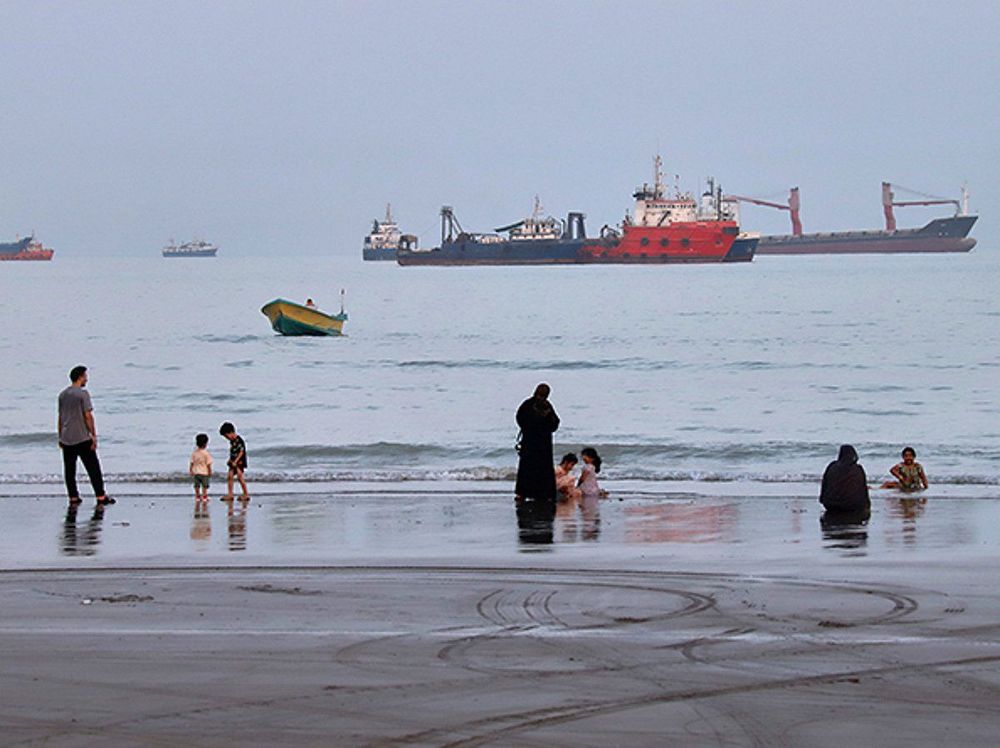
Before Iran began threatening attacks, approximately 100 cargo vessels transited the strait daily, with 60-70% being oil tankers and gas carriers. More than 95% of that traffic has since been diverted.
Abdolreza Davari, an analyst who previously advised former President Mahmoud Ahmadinejad, said Iran's effective control has given it leverage with the US and regional countries that can help guarantee its security.
More than revenue from the strait, Iran wants to confirm its management and sovereignty over the strait.
Formal control over even part of the strait would represent a clear win for Iran and a setback for the US, which has yet to accomplish some of its various and shifting objectives in the conflict. It would also undermine global norms on freedom of navigation and establish a concerning precedent that nations can shut down trade chokepoints at will.
China, which purchases oil from Iran and has influence over it, said as recently as May that
normal and safe passagethrough the strait should be restored.
Tehran's confidence that time favors Iran
They started the war, but its end was never with them. We always decide for ourselves when it ends,Mahdi Mohammadi, an adviser to Iran's chief negotiator, posted on social media.
Iran is going after the enemy's defeat—not an agreement.
He said a surprise Iranian attack on Jordan in July
compensatedfor a drop in oil prices. That contributed to the collapse of an interim agreement reached in June that had offered significant concessions to Iran, including a US waiver to sell oil internationally and the promise of broader sanctions relief.
Iran has repeatedly stated the Strait of Hormuz will not return to being an open waterway and that it will continue attacking ships attempting to transit without its permission. Iran's joint military command has called it an
unbreakable red line.
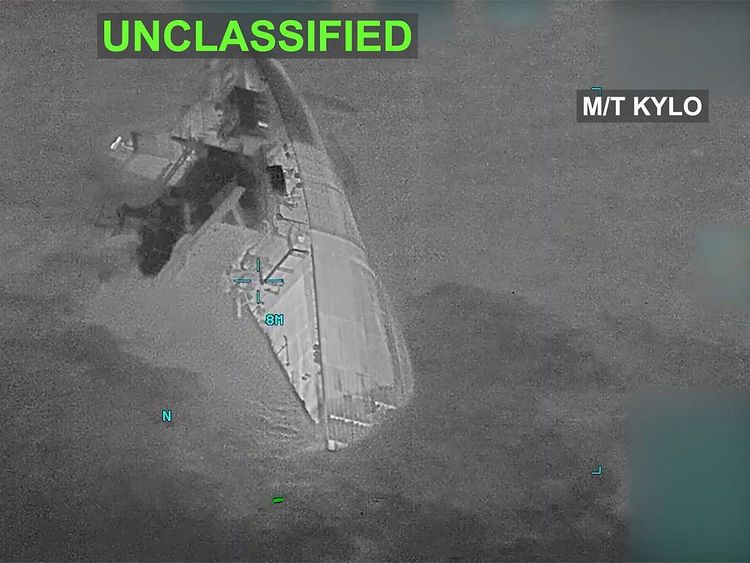
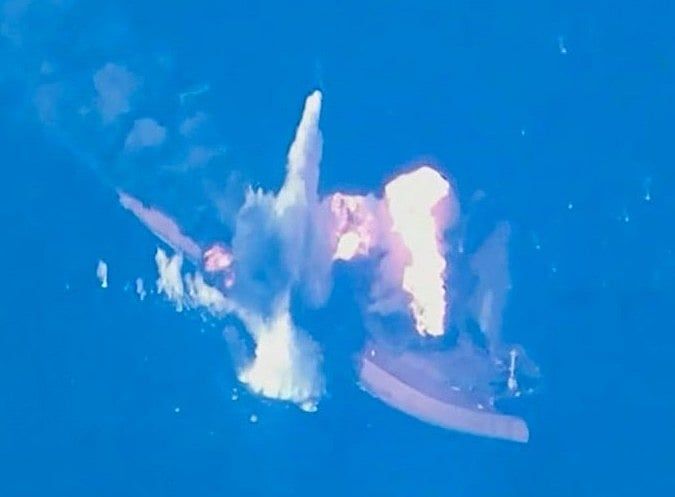
Despite US and Israeli strikes that decimated much of Iran's conventional navy in February, the Islamic Revolutionary Guard Corps Navy has remained operationally effective. The IRGCN operates separately from the conventional Islamic Republic of Iran Navy and specializes in asymmetric warfare using fast-attack craft, missiles, mines and drones. Its decentralized structure has allowed it to continue threatening shipping even after conventional naval assets were destroyed.
For Iran, the Strait of Hormuz has become a strategic lever for deterrence, maintaining the regional balance of power, and reshaping the security rules in the Persian Gulf,said Mostafa Najafi, a Tehran-based security analyst.
This dynamic poses a major obstacle to ending the conflict, much less resolving the even more complex, longstanding dispute over Iran's nuclear program.
The atomic issue, because of the conflict in the Strait of Hormuz, has been pushed to the side, and in reality, that is in Iran's interests,said Rahman Ghahremanpour, an Iran-based analyst. Control of the strait would give Iran leverage if nuclear talks resume, he added.
Significant risks in Iran's gamble
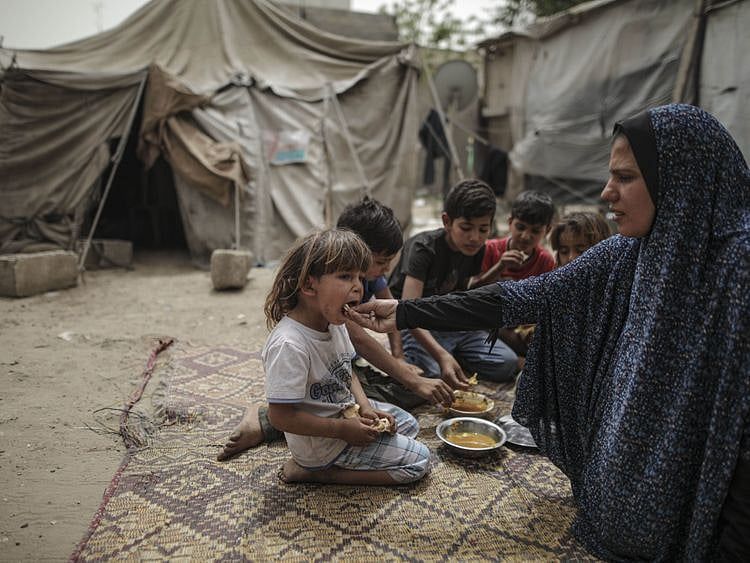
The economic fallout has spread worldwide but is particularly acute in Iran. US and Israeli strikes have pummelled its industrial base. The US blockade has choked off much of its oil exports. Iranians are grappling with triple-digit food inflation. Trump has repeatedly threatened major strikes on civilian infrastructure including water and electricity systems.
In December, a currency crisis sparked some of the largest anti-government protests in the 47-year history of the Islamic Republic. Authorities responded with a bloody crackdown in which thousands were killed and tens of thousands detained.
Many in Iran, including those close to moderate President Masoud Pezeshkian, fear the country may be pushing too far. Mohammad Javad Zarif, who as foreign minister was the lead negotiator for the 2015 nuclear deal, wrote in a recent essay that Iran's achievements in the war had opened
an exceptional window for diplomacy.But he warned that if a deal is not struck soon, then
economic recovery will be difficult, and the possibility of internal unrest or renewed aggression, especially after the US elections, cannot be ruled out.
The conflict has already produced multiple surprises. After the first wave of US and Israeli airstrikes on February 28 killed Iran's supreme leader and other top officials, Trump suggested it would be over within weeks. Instead, the conflict has emboldened Iran's leaders and mobilized their supporters. Tehran is using the strait
to show that it has not been defeated,Ghahremanpour said.
It can increase its legitimacy at home.
But the strategy could backfire. Iran's resilience has limits and there are concerns that an economic crash could trigger unrest.
Iran cannot continue with this strategy forever, and at a certain point, in reality, it has to reach a deal with America,Ghahremanpour said.
Davari, however, said that for now Iran can withstand the pressure.
It's unlikely, despite the difficulties of the economic situation, that Iran will retreat from its positions.