Pentagon official urges Asian allies to increase defence spending as US reaffirms regional commitment
Undersecretary of Defense Elbridge Colby calls for greater military investment from Asian partners during Southeast Asia tour, emphasizing shared responsibility while assuring continued US presence in the Indo-Pacific region.
Pentagon official urges Asian allies to increase defence spending as US reaffirms regional commitment
A senior Pentagon official has called on Asian allies to substantially increase their defence spending and take greater responsibility for regional security, while emphasizing that the United States remains firmly committed to the Indo-Pacific despite ongoing conflicts elsewhere.
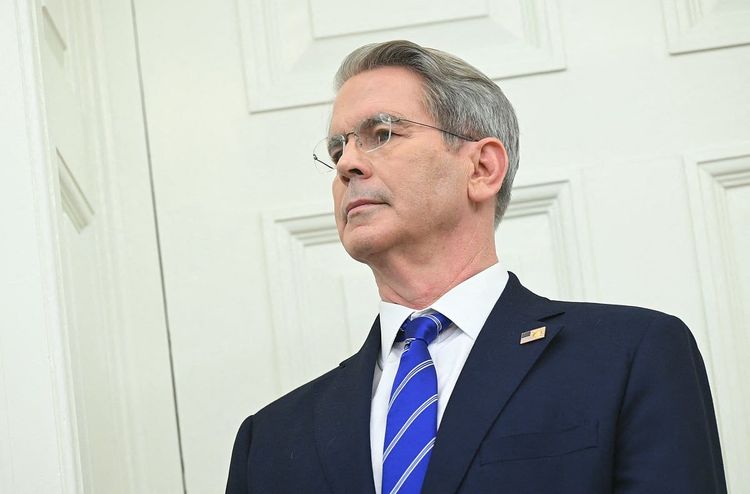
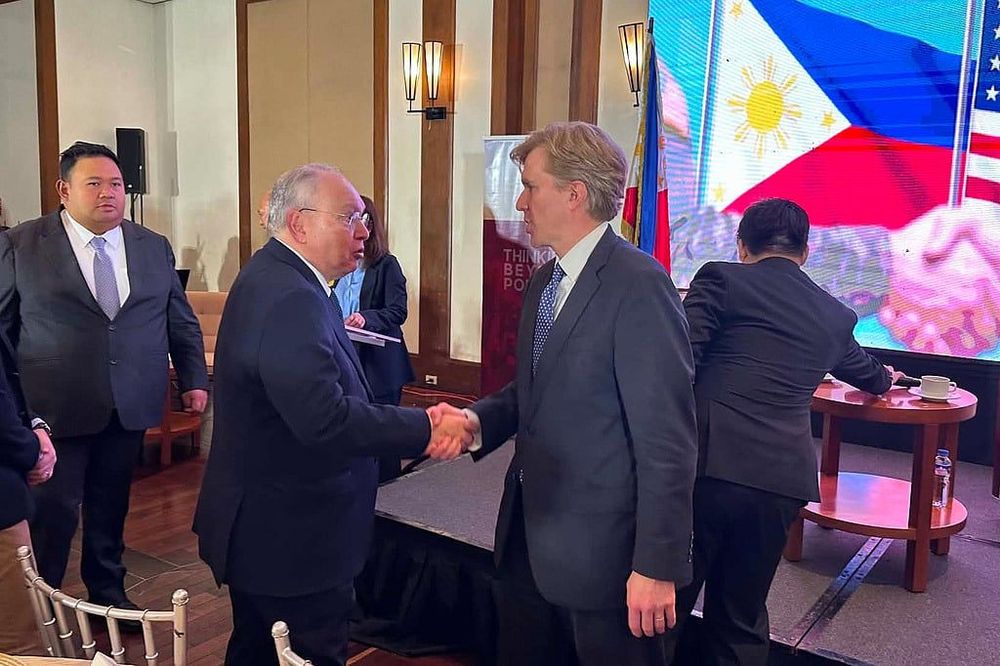
Elbridge Colby, who assumed office as Undersecretary of Defense for Policy in April 2025 following a narrow 54-45 Senate confirmation vote, made the appeal during a forum in Manila on Monday, marking the first stop of his Southeast Asia tour that will also include Indonesia, Thailand and Cambodia.
Speaking to an audience of foreign diplomats, military leaders, business executives and journalists, Colby dismissed concerns that Washington is retreating from the region despite the ongoing Iran conflict that began in February and the administration's focus on Middle Eastern affairs.
America is definitely not disengaging from Asia — to the contrary. Our vital national interests dictate our enduring presence here. We are not leaving; in fact, we are digging in, to ensure a favorable balance of power where it matters most. We see Asia as of paramount importance.
Call for shared defence responsibility
The undersecretary's message builds on remarks delivered by Defense Secretary Pete Hegseth at the Shangri-La Dialogue in Singapore in late May, where Hegseth called on Asian partners to spend 3.5 percent of their GDP on defence. At that conference, Hegseth bluntly stated the administration's priorities with the phrase "less Shangri-La, more ships, more subs," emphasizing concrete military capabilities over diplomatic forums.
Colby, who previously served in the Trump administration from 2017 to 2018 as Deputy Assistant Secretary of Defense for Strategy and Force Development, where he led development of the 2018 National Defense Strategy that reoriented Pentagon priorities toward countering China's military expansion, stressed that enhanced regional security requires collective effort.
This defense architecture cannot rest on American shoulders alone. It must be upheld by a network of highly capable, sovereign nations that have modernized their own forces and stepped up to secure their own territory — transforming our relationships into true partnerships of equals.
The Pentagon official added that when Washington asks allies to invest more in their own defence capabilities, it represents a call for partnership rather than abandonment. "We are looking for partners, not protectorates," Colby emphasized.
South China Sea tensions
While Colby avoided direct criticism of Beijing during his Manila appearance, the strategic context for his remarks centres on China's increasingly assertive actions in the South China Sea. The waterway, a critical global trade route, has been the site of escalating confrontations between Chinese forces and those of the Philippines and other regional claimants.
The disputed waters are claimed in their near-entirety by China, which has rejected a landmark 2016 arbitration ruling issued under the UN Convention on the Law of the Sea. That July 2016 tribunal decision invalidated China's expansive nine-dash line claim and found no legal basis under international law for Beijing's assertion of historic rights over the South China Sea. China's Foreign Ministry has consistently called the ruling "illegal, null and void, and non-binding," maintaining a policy of "non-acceptance and non-recognition."
US commitment to regional allies
Washington has repeatedly stated its obligation to defend the Philippines, its oldest treaty ally in Asia under the 1951 Mutual Defense Treaty, if Filipino forces, ships or aircraft come under armed attack anywhere, including in disputed waters. The Enhanced Defense Cooperation Agreement, signed in 2014 and expanded in 2023, now covers nine Philippine military bases where US forces can rotate troops and construct facilities, with over 82 million dollars allocated for infrastructure development at these sites.
Colby praised the Philippines for its efforts to strengthen defence capabilities through regular large-scale combat exercises with US forces, and cited similar modernization initiatives by Thailand, Indonesia and other Southeast Asian security partners.
The Pentagon's top policy adviser reiterated Hegseth's May pledge to build and sustain robust defence capabilities in the Western Pacific "that ensures aggression is infeasible, escalation unattractive and war deemed irrational."
The visit comes as the United States seeks to maintain strategic focus on Asia while managing the aftermath of the Iran conflict, which saw coordinated US and Israeli strikes beginning in late February, followed by a conditional ceasefire mediated by Pakistan in early April.