Russia summons Japanese ambassador after Putin's historic Kuril Islands visit
Moscow summoned Japan's ambassador after Tokyo protested President Putin's first-ever visit to the disputed Kuril Islands, marking a new escalation in the decades-old territorial dispute that has prevented the two countries from signing a World War II peace treaty.
Russia summons Japan ambassador over disputed islands row
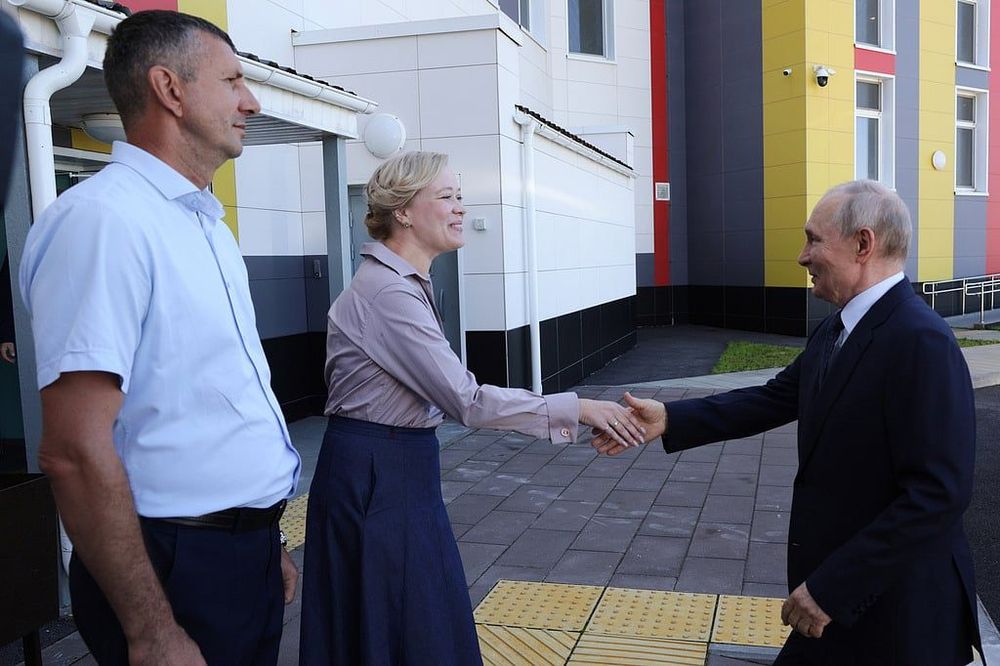
Russia summoned the Japanese ambassador on Monday following Tokyo's condemnation of President Vladimir Putin's recent visit to the contested Kuril Islands, intensifying a territorial dispute that has strained relations between the two nations for nearly eight decades.
The diplomatic clash centers on four islands—Iturup, Kunashir, Shikotan, and Habomai—which Russia calls the Southern Kurils and Japan refers to as the Northern Territories. Putin, 73, traveled to the islands after visiting the nearby Russian island of Sakhalin, marking his first visit to the disputed territory in his 26 years in power.
Japanese Prime Minister Sanae Takaichi described Putin's visit as absolutely unacceptable and incompatible with Japan's position on the Northern Territories. In response, Tokyo summoned Russia's ambassador in protest, prompting Moscow to retaliate by calling in Japanese envoy Akira Muto.
Russian Foreign Minister Sergei Lavrov said Monday that Japanese officials had crossed the line of decency in criticizing Putin's trip. Ministry spokeswoman Maria Zakharova later told state news agency TASS that after Lavrov's comments, the ambassador had suddenly started feeling better and would attend on Tuesday, after initially citing illness or absence from Moscow.
A dispute rooted in World War II
The territorial conflict dates to the final days of World War II when Soviet forces invaded and occupied the islands between August 18 and September 1, 1945, following the Yalta Agreement. Under that February 1945 accord, Allied powers agreed the Kuril Islands would be handed to the Soviet Union in return for its entry into the war against Japan. By 1949, the Soviet Union had deported all Japanese residents from the islands, where approximately 17,000 Japanese had lived before the war.
The dispute has prevented Russia and Japan from signing a peace treaty to formally end World War II hostilities. Under the 1951 Treaty of San Francisco, Japan renounced all rights to the Kuril Islands, but the treaty did not specify who had sovereignty, and Russia did not sign it. Japan has never recognized the four southernmost islands as part of the Kuril chain covered by this renunciation.
Strategic and economic significance
The disputed islands, which stretch as part of a 1,300-kilometer chain from Japan's northern island of Hokkaido to Russia's Kamchatka Peninsula, hold significant strategic and economic value. The territory contains rich fishing grounds, mineral deposits including gold and silver, and rare earth metals critical to the production of supersonic aircraft. The islands currently house a population of approximately 20,000 Russian citizens.
Since 2015, Russia has militarized the Kuril Islands, constructing missile systems, deploying anti-air missile launchers, and building more than 50 new pieces of military infrastructure on the disputed territory.
Relations deteriorate further
Ties between Japan and Russia have worsened significantly since the full-scale conflict in Ukraine began in 2022. Japan joined other G7 countries in sanctioning Russia, freezing assets of Russian officials and banks, banning exports of certain equipment, and providing non-lethal defense aid to Kyiv. Russia responded by halting peace treaty negotiations with Japan in March 2022.
Lavrov said Muto's summons was intended to address the conduct of the Japanese leadership and how ambassadors should conduct themselves in the host country.