Trump shifts to economic pressure strategy as Iran conflict drags on
President Trump adopts a lower-profile approach to Iran, emphasizing sanctions and economic pain over military strikes while keeping armed intervention as an option.
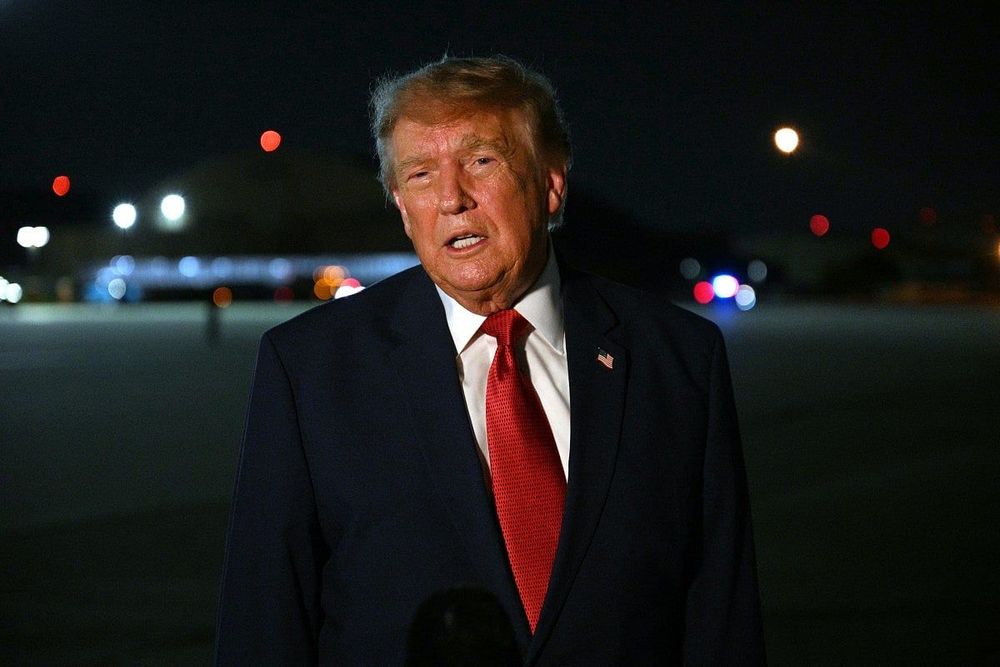
Trump shifts to economic pressure strategy as Iran conflict drags on
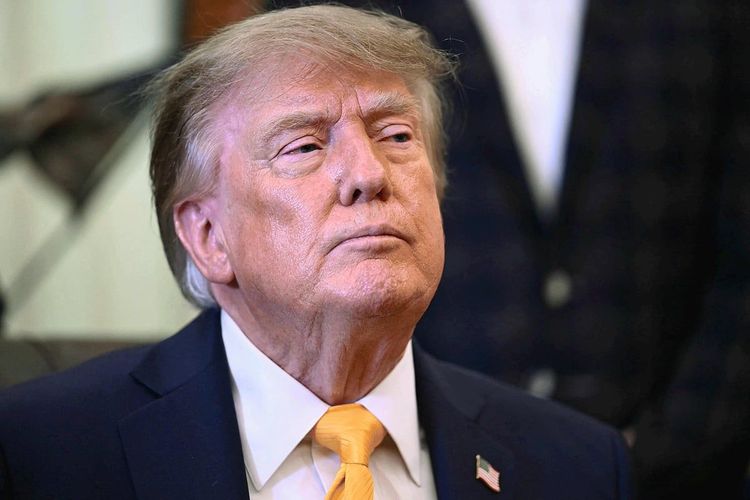
President Donald Trump has adopted an unexpectedly restrained posture in the ongoing conflict with Iran, betting on economic strangulation rather than military escalation as the war enters its sixth month.
"We are low-keying it," Trump told news site Axios on Sunday. "We're only semi-negotiating with them. We are just watching Iran with its huge inflation and the fact they have no money."
The shift represents a marked change in tone for a president who previously threatened devastating strikes against Tehran. Trump now emphasizes the economic toll inflicted through sanctions, claiming repeatedly that Iran faces inflation exceeding 300 percent. Independent economic data, however, shows Iran's inflation crisis, while severe, is less extreme than the president suggests. The International Monetary Fund projects Iran's annual inflation will average around 68.9 percent in 2026, with year-on-year rates reaching between 83.1 and 88.6 percent by mid-year.
"Iran is broke, totally broke and they're not paying their soldiers," Trump said Monday from the Oval Office, repeating his assessment that economic pressure alone may force Tehran to capitulate.
Strategic chokepoint remains contested
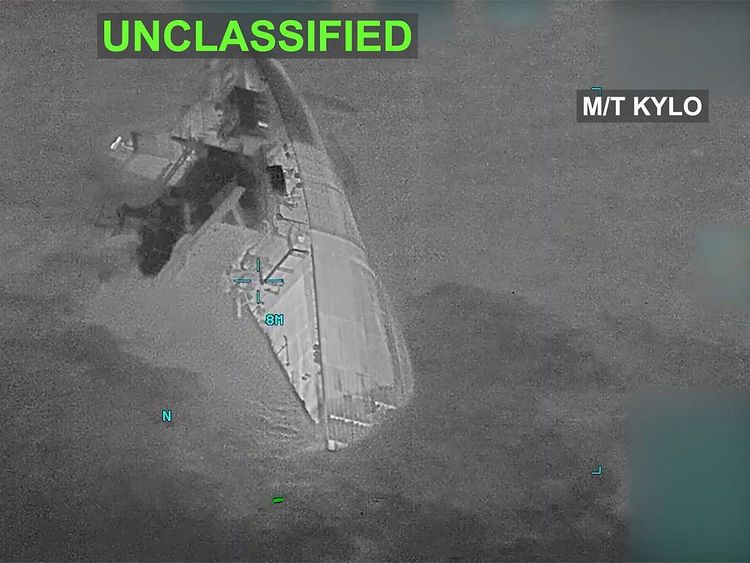
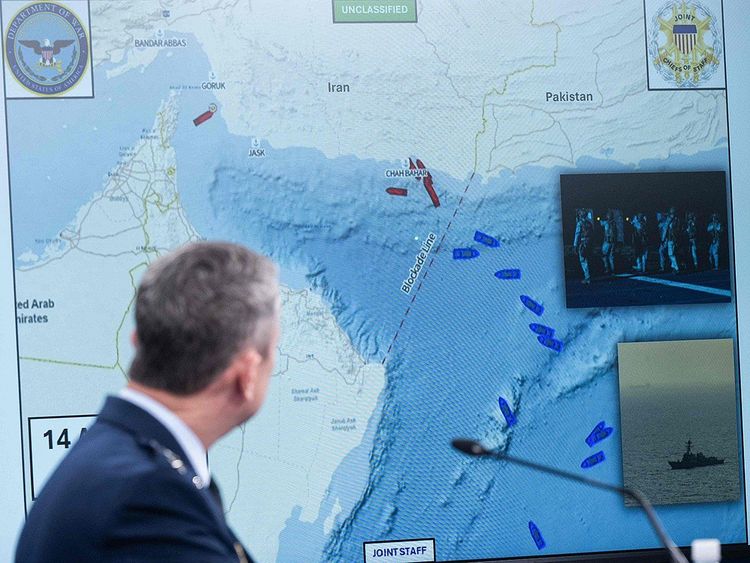
Central to the economic war is the Strait of Hormuz, where Tehran has imposed a lockdown while Washington enforces its own blockade on Iranian ports. The narrow waterway carries extraordinary strategic weight: in 2025, approximately 34 percent of global crude oil trade passed through the strait, with roughly 20 million barrels per day in total petroleum products traversing the passage. That represents about 25 percent of global oil trade and 19 percent of liquefied natural gas trade worldwide.
The disruption has hit Asian economies particularly hard. China, India, Japan and South Korea collectively receive approximately 69 to 84 percent of crude oil flowing through the strait, with Asian nations as a whole accounting for roughly 89 percent of shipments. When the war broke out, about 90 percent of traffic through the waterway was immediately diverted, rising above 95 percent when Iran threatened to attack vessels. Oil prices surged and parts of Asia faced immediate supply shortages.
Trump has claimed the United States maintains "total control" of the strait, though the reality on the ground reflects a tense standoff with no clear victor.
Sanctions tighten
The administration has steadily expanded its economic assault on Tehran. In mid-July, the U.S. Treasury sanctioned seven individuals and entities involved in the Islamic Revolutionary Guard Corps' international weapons procurement network, following earlier measures on July 14 targeting over 50 individuals and vessels linked to Iran's oil shipping operations. Additional sanctions announced at the end of July specifically targeted the IRGC, the ideological military wing at the heart of Iran's security apparatus.
The Wall Street Journal reports that Trump's advisors have presented him with detailed data on sanction impacts, and he is now considering further tightening existing measures while contemplating new restrictions. These economic tools have locked Iran out of more than $100 billion in frozen overseas assets, held primarily in foreign banks and accumulated largely from oil sales after Washington withdrew from the 2015 nuclear agreement and reimposed sanctions in 2018.
Military options constrained
The strategic shift may partly reflect shrinking military options. Press reports indicate American munitions stockpiles have been severely depleted during the conflict. The U.S. military has exhausted nearly 80 percent of its THAAD missile interceptors and roughly 50 percent of Patriot interceptors since the war began, with replenishment estimated to require three or more years.
Michael O'Hanlon, an expert at the Brookings Institution think tank, acknowledged Iran's economic distress but questioned whether it would be sufficient. "Iran is in terrible shape economically. It can't ship oil at any meaningful level. And it still labors under sanctions and still can't access its overseas assets," he said. "The question is, do its leaders really care? I think they care some, but not a lot."
Tehran dismisses pressure
Iranian officials have brushed off the sanctions escalation as a sign of American weakness. Foreign ministry spokesman Esmaeil Baqaei called the fresh sanctions push a "retreat," noting Iran has endured U.S. economic pressure for decades.
"Whenever Washington proves itself incapable of pursuing diplomacy it retreats into sanctions; and whenever those sanctions fail to produce results, it simply increases the dose. The real risk is that American politicians, clinging to this habit, will instead strangle their own remaining chances of a less humiliating exit from a crisis of their own making."
In his interview with Axios, Trump compared the Iran standoff to chess. Baqaei responded at a press briefing: "Iranians have shown they are professional chess players."
Whether the notoriously impatient American president, who typically favors flashy deals and combat sports spectacle over long-term strategic patience, can maintain this lower-profile approach remains an open question as the conflict grinds on with no resolution in sight.