US Could Assume Administrative Control of Strait of Hormuz Under Post-War Scenarios, Congressional Report Reveals
A Congressional Research Service analysis outlines extraordinary options for the strategic waterway's future, ranging from direct US administration to prolonged instability, as President Trump escalates claims of American control over the strait.
US Could Assume Administrative Control of Strait of Hormuz Under Post-War Scenarios, Congressional Report Reveals
The United States may face unprecedented choices over the Strait of Hormuz following any resolution of the current conflict with Iran, including the possibility of assuming formal administrative control over one of the world's most critical energy chokepoints, according to a Congressional Research Service report examining post-war scenarios.
The analysis comes as President Donald Trump has made increasingly expansive assertions about American authority over the narrow waterway, which carries roughly 27% of global maritime oil trade and 22% of worldwide liquefied natural gas shipments. Qatar alone exports approximately 9.3 billion cubic feet per day of LNG through the strait, with the UAE contributing another 0.7 billion cubic feet daily.
Unprecedented Administrative Options
The Congressional Research Service report, prepared for lawmakers, identifies several potential paths forward. One scenario envisions the US seeking formal administration of the strait, contingent on Iran either agreeing to such an arrangement or becoming unable to continue military operations. Under this model, Washington could potentially establish user fees or pursue other economic arrangements.
Such a framework would mark a dramatic departure from pre-war norms and represents far more than traditional freedom-of-navigation operations, which the US has conducted globally since formally establishing the program in 1979. The administrative approach would also exceed the preferences of allied nations in Europe, Turkey, India, China and the Gulf Arab states, which have generally advocated for unrestricted transit.
The report acknowledges that permanent US administration would demand substantial long-term military, diplomatic and financial commitments from Washington.
Cooperative International Model
An alternative scenario outlined in the analysis involves cooperative administration among the United States, Iran and Gulf Arab nations. The report points to the Strait of Malacca as a potential precedent, where Indonesia, Malaysia and Singapore established a collaborative framework in September 2007 following International Maritime Organization-sponsored meetings.
That arrangement, which represented the first implementation of Article 43 of the United Nations Convention on the Law of the Sea, includes an Aids to Navigation Fund supported by voluntary contributions from governments and maritime industry participants to maintain critical navigational infrastructure.
A Hormuz cooperative mechanism would not necessarily entail US sovereignty over the waterway, but rather a jointly managed system designed to ensure continued operation of the strategic passage. The strait currently operates under the international legal regime of transit passage under UNCLOS, which provides more extensive navigation rights than innocent passage through territorial waters.
Risk of Prolonged Instability
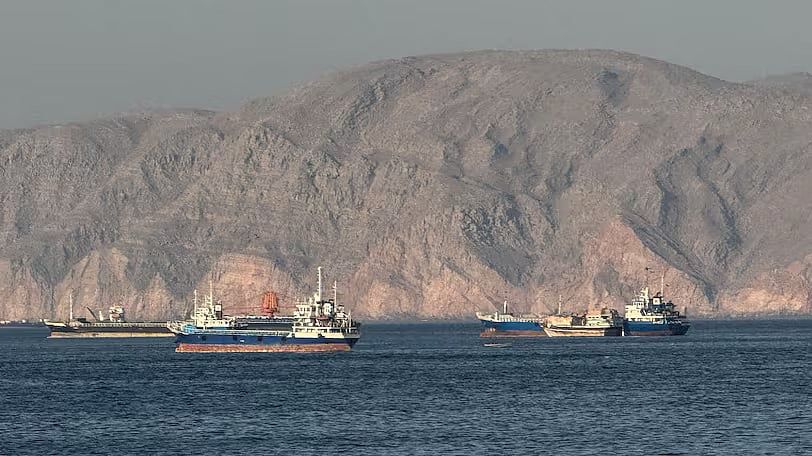
The Congressional Research Service also examines a far less interventionist possibility: extended instability in which Iranian attacks on shipping and American retaliatory strikes continue disrupting traffic through the 22-nautical-mile-wide strait for an extended period, potentially keeping it effectively closed or severely restricted.
Such an outcome would carry significant economic consequences, particularly affecting the 84% of Hormuz crude oil and condensate shipments destined for Asian markets, with China, India, South Korea and Japan serving as primary destinations. Saudi Arabia, which moves approximately 38% of all crude and condensate transiting the strait—roughly 5.5 million barrels daily—represents the largest single user of the waterway.
Another scenario involves Washington deprioritizing Hormuz security, reducing resources devoted to keeping the passage open. This reflects an internal tension in US policy, as Trump has questioned whether America should continue bearing the protection burden for other nations' oil flows, even while identifying an open Hormuz as a core national interest.
Global Energy Implications
The stakes extend beyond shipping volumes. The Persian Gulf region accounts for more than 30% of global crude oil production and over 75% of worldwide spare crude oil production capacity, meaning Hormuz disruptions affect not only transit but the global market's ability to respond to supply shocks.
Under normal pre-conflict conditions, approximately 88 to 130 commercial vessels transited daily through two shipping lanes, each about two miles wide and separated by a two-mile buffer zone. Current traffic remains far below those levels despite periodic reopening attempts.
Trump's Escalating Claims
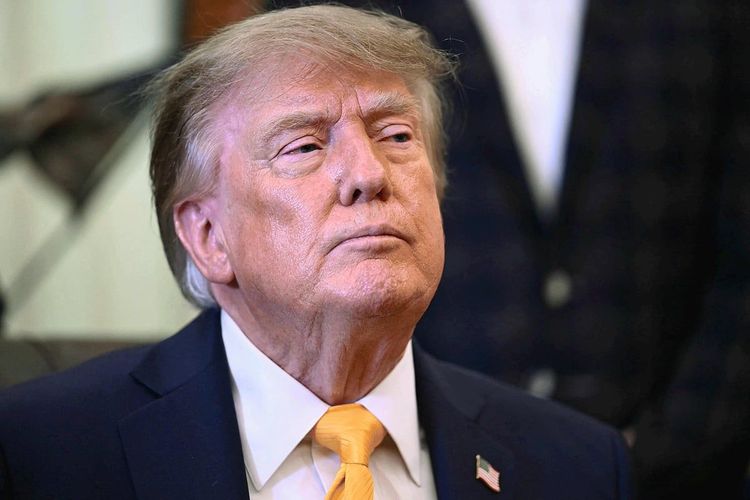
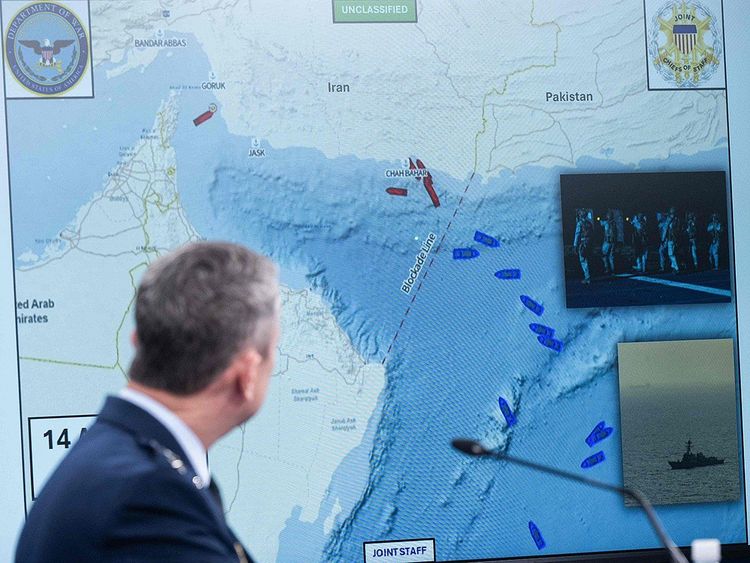
President Trump's assertions about the strait have evolved considerably since May, when he announced Project Freedom to escort civilian vessels through the waterway. By June, he claimed US forces had been secretly moving ships and cargoes for weeks. In July, Trump proposed designating America as Guardian of the Hormuz Strait and charging a 20% transit fee to fund security operations.
Most recently, Trump declared the US has total control of the area and threatened to declare Hormuz a territory of the United States, a claim that would raise profound questions under international law regarding the sovereignty of Iran and Oman, through whose territorial waters the strait passes.
The strait's strategic importance is not new to US military planners. Operation Praying Mantis in April 1988, when American forces attacked Iranian oil platforms in retaliation for a mine strike on a US frigate during the Iran-Iraq War, represented the largest US Navy surface action since World War II.
The Congressional Research Service report, dated August 4, 2025, and coordinated by Michael Ratner, provides lawmakers with analysis as they consider the long-term implications of American involvement in securing the waterway. Among other US efforts noted in the document, the International Development Finance Corporation established a $40 billion maritime reinsurance facility for Hormuz transit in April 2026, combining $20 billion in political risk insurance coverage with $20 billion from private insurers including Chubb, though no coverage had been utilized as of the report's publication.
The analysis underscores that whoever controls access to the Strait of Hormuz wields significant influence over global energy prices, shipping costs and the economic security of major Asian importers, making the post-war determination of the waterway's governance one of the conflict's most consequential unresolved questions.