Metro Manila floods again as billions in flood control funds fail to prevent disaster
Despite massive spending on flood infrastructure, heavy monsoon rains expose persistent failures in Manila's flood defense systems, fueling public anger over alleged corruption and unfinished projects.
Death toll and damage
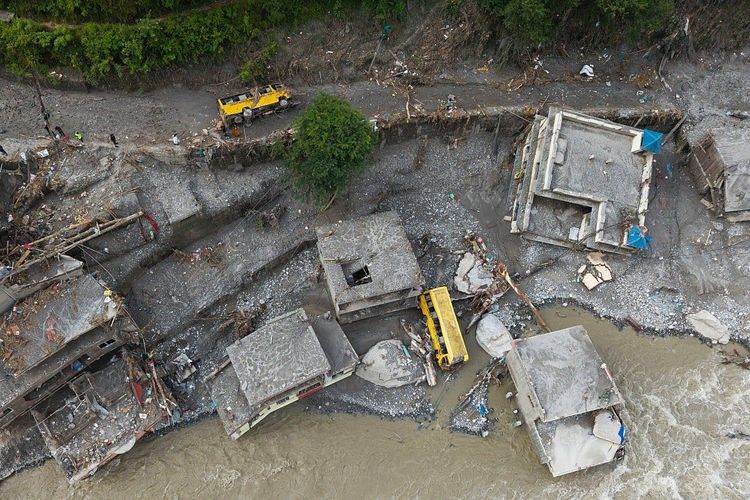
Heavy rainfall driven by the enhanced southwest monsoon and tropical cyclones Luis and Maymay triggered widespread flooding and landslides across the Philippines, killing at least 23 people and affecting 4.9 million people, primarily in Luzon and parts of the Visayas.
The disasters come amid mounting public frustration over the effectiveness of the country's flood control infrastructure. Between 2016 and 2021, the government allocated ₱587 billion for flood control projects under President Rodrigo Duterte's administration, representing 19 percent of the Department of Public Works and Highways' total ₱3.135 trillion infrastructure budget during that period.
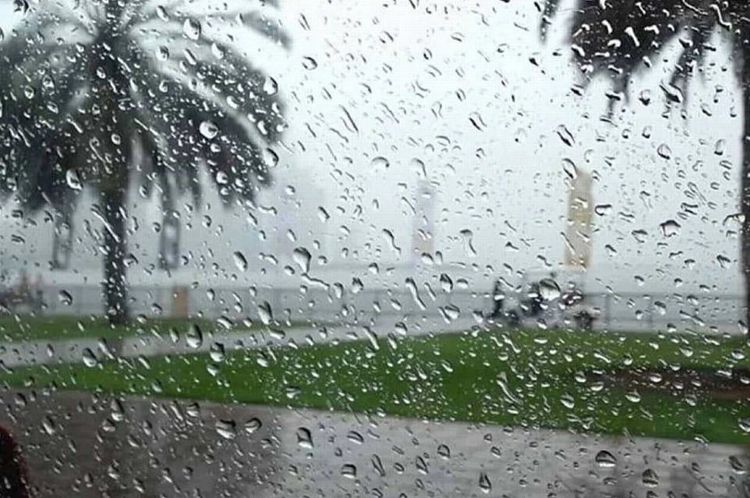
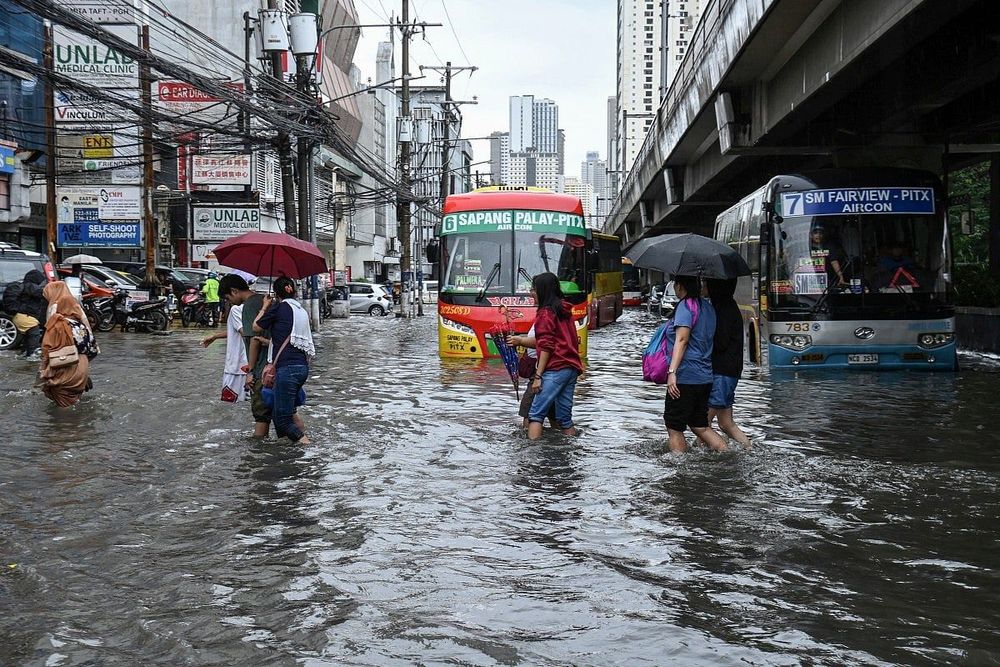
Yet on August 17, 2026, intense downpours produced waist-deep floodwaters across Metro Manila. Station readings at PAGASA's Science Garden in Quezon City recorded peaks approaching or exceeding 200 mm in roughly five hours, leaving streets impassable and residents stranded.
The majority of the 23 confirmed deaths occurred in Benguet province, including Baguio City, primarily from landslides. Additional fatalities were reported in Rizal, Batangas, La Union and Quezon provinces, caused by landslides, drowning, rockslides, electrocution and fallen trees. Approximately 17 people were injured and at least three remain missing.
Around 1.41 million families were impacted across multiple regions, with tens of thousands displaced and thousands sheltered in evacuation centers. Infrastructure damage includes hundreds of destroyed houses, agricultural losses in the hundreds of millions of pesos, and widespread disruptions to roads, bridges, power and water supplies.
The flooding recalled Typhoon Ulysses in 2020, which affected nearly one million families in Metro Manila and caused approximately ₱17 billion in infrastructure damage. The Global Climate Risk Index 2021 ranked the Philippines as the 17th most affected country by extreme weather events, costing an average of $3.2 billion annually.
Corruption allegations shadow disaster response
Public anger extends beyond the weather. Senator Panfilo Lacson has led investigations into alleged ghost projects, overpricing and kickbacks in the flood control system. In December 2025, he estimated that about ₱180 billion had been lost to ghost flood control projects since 2016.
President Marcos established an Independent Commission for Infrastructure in September 2025 to investigate flood control corruption. The commission concluded its mandate on March 31, 2026, but its findings have not been released to the public.
Lacson's Senate Blue Ribbon Committee produced a partial report exceeding 400 pages on flood control corruption. However, the report could not be formally filed as of May 2026 because it lacked sufficient signatures, receiving only seven of the required nine senators' endorsements.
Despite political obstacles, criminal complaints have been filed before the Sandiganbayan against former and incumbent public officials, contractors and private individuals linked to alleged anomalous flood control projects in Bulacan and Oriental Mindoro, with the Department of Justice forming special prosecution panels.
In a dramatic policy shift responding to the corruption scandal, the 2026 Philippine national budget entirely eliminated new locally-funded flood control projects. The initial ₱255 billion allocation was realigned to other programs including social assistance and education.
Marikina: unfinished defenses
The irony is particularly stark in Marikina. The Pasig-Marikina River Channel Improvement Project is one of Metro Manila's biggest long-term flood defense schemes, backed by Japan's JICA. The Phase 4 loan agreement, signed in January 2019, amounts to ¥37.905 billion (approximately ₱18.223 billion), with construction beginning in November 2021.
The project aims to rehabilitate the river, improve flood conveyance and install major control structures. However, DPWH Secretary Vince Dizon said in March that resolving right-of-way issues for Phase 5 remains critical to improving water flow and accelerating floodwater recession.
In August 2025, DPWH indicated that river widening and revetment works were targeted for completion by 2028, while critical gate structures at Manggahan and Marikina could extend into 2029. This means comprehensive protection remains years away while Manila floods now.
Adding to concerns, a House lawmaker this month called for an investigation into the alleged non-operation of two pumping stations near Marikina's Tumana and Malanday areas, highlighting how incomplete drainage connections, clogged waterways and non-functioning pumps undermine the broader system.
Seven solutions for a systemic crisis
Metro Manila sits in a catchment basin bordered by Laguna Lake, which spans 911 to 949 square kilometers, making it the largest lake in the Philippines and the third largest inland body of water in Southeast Asia after Cambodia's Tonle Sap and Sumatra's Lake Toba. Several mountain ranges surround the capital, channeling massive rainfall volumes downward.
Experts say Manila needs a basin-wide approach combining multiple strategies:
Complete the Pasig-Marikina system: Finish river widening, dredging, floodwalls, gates and drainage works as one integrated system rather than isolated projects.
Build upstream retention capacity: Expand retarding basins, reservoirs and watershed storage in Marikina, Rizal, Quezon and Laguna uplands to prevent all rainwater from rushing downstream simultaneously.
Modernize drainage and pumping: Metro Manila requires functioning high-capacity pumping stations, larger drainage pipes, backflow gates and regular desilting.
Protect the entire watershed: Safeguard forests and open spaces upstream, restore waterways and wetlands to slow runoff from increasingly paved surfaces.
Mandate water cisterns: Require new developments to retain and slowly release stormwater. The Burgos Circle underground detention tank in Bonifacio Global City demonstrates this approach: the system is 12 meters deep and can hold 22,000 cubic meters of water — equivalent to eight Olympic-sized swimming pools — before gradually releasing it into local creeks and the Pasig River.
Make spending accountable: Every major project should have a public dashboard showing cost, contractor, location, physical progress, target completion and flood risk reduction, with independent inspections and penalties for ghost or defective projects.
Develop pumped-storage hydropower: These projects can prevent runoff water from flooding low-lying areas during heavy rains while conserving water upstream to produce electricity through slow-release valves.
For millions of Metro Manila residents watching floodwater rise again, the question remains brutally simple: after billions spent and promises made, why are the streets still drowning?