The paradox of humanitarian success: Building a world that needs less aid
On World Humanitarian Day, The Big Heart Foundation's Mariam Al Hammadi argues that true humanitarian achievement lies not in expanding aid operations, but in creating resilient communities that no longer require assistance.
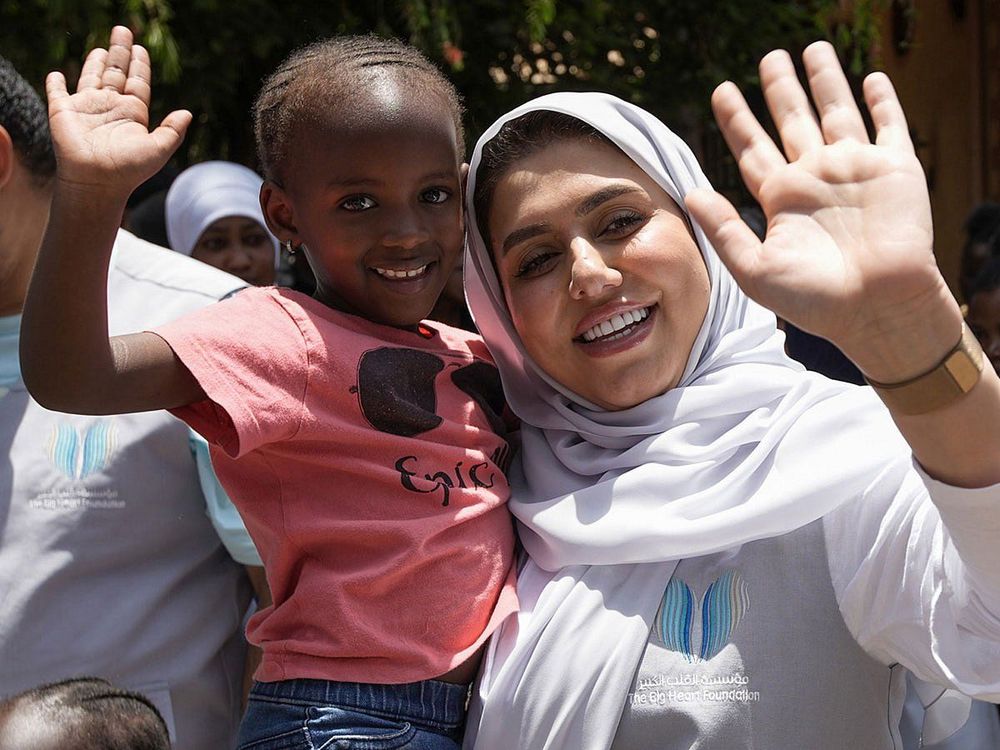
From emergency response to lasting resilience
The title may seem counterintuitive coming from a humanitarian organization, yet the ultimate measure of success for any such institution is not growth in programs or budgets—it is reaching the point where communities no longer require its services.
World Humanitarian Day, observed annually on August 19, commemorates the 2003 bombing of UN headquarters in Baghdad that claimed 22 lives, including UN Special Representative Sergio Vieira de Mello. Established by the UN General Assembly in 2008, the day honors those working to alleviate human suffering while raising a fundamental question: Should humanitarian work aim to manage crises indefinitely, or to build communities capable of overcoming them?
When organized humanitarian efforts emerged over a century and a half ago, they arose from necessity—a response to immediate suffering grounded in the conviction that human dignity should never be held hostage to war, poverty, or disaster. Since then, humanitarian action has evolved dramatically, saving millions of lives and helping families restore their livelihoods.
The Big Heart Foundation exemplifies this evolution. Under the leadership of Mariam Al Hammadi, who was appointed Director General in 2023 after serving as Director since 2017, the foundation has supported over 5 million people across more than 30 countries. Through its partnership with UNHCR, the organization has contributed $28.3 million since 2012 to assist around 1 million refugees and internally displaced persons. The foundation's chairperson, Her Highness Sheikha Jawaher bint Mohammed Al Qasimi, serves as UNHCR's Eminent Advocate for Refugee Children.
Yet despite such progress, crises continue to multiply. The UN's Global Humanitarian Overview 2026 aims to reach 87 million people in need worldwide, amid a sector facing significant challenges as funding has regressed to 2016 levels while needs have increased by 240% since 2020. The humanitarian sector reached nearly 98 million people in 2025, but now confronts what has been termed a "humanitarian reset," with traditional funding architecture under mounting strain.
Measuring what matters
The greatest successes often go unseen: a crisis prevented from deepening, a child's education continuing without interruption, a family avoiding permanent dependence on aid, a community withstanding adversity without losing everything. Humanitarian action should be measured not by the volume of aid delivered, but by its ability to reduce the need for aid altogether.
This approach requires moving beyond temporary relief. The Big Heart Foundation has invested AED 30 million to establish a medical clinic in Jordan's Zaatari refugee camp, providing ongoing health services to Syrian refugees. In the UAE, the foundation launched the Big Heart Educational Center with an investment of AED 2.17 million, serving 492 students through education and vocational training programs designed to build long-term capacity.
Through the "Home for a Home" initiative, launched in partnership with Arada and UNHCR, the foundation funded construction of 757 homes housing 448 refugee families in Kenya's Kakuma Refugee Camp, along with water infrastructure benefiting more than 43,000 people. These projects demonstrate how humanitarian work can create lasting infrastructure rather than temporary solutions.
A national commitment to global responsibility
This vision extends beyond individual organizations. The UAE ranked as the world's third-largest humanitarian donor in 2025, contributing $1.46 billion in humanitarian assistance according to the UN Office for the Coordination of Humanitarian Affairs. The nation pledged an additional $550 million to support the UN's Global Humanitarian Overview for 2026, reflecting a cultural commitment to solidarity and collective responsibility.
Al Hammadi, who began her humanitarian career with The Big Heart Foundation in 2012 after working as a Credit Risk Officer at Emirates Airlines, emphasizes that responsibility extends beyond immediate help. It includes strengthening resilience, expanding access to education and healthcare, and embedding values of compassion within societies where giving becomes cultural practice and standing beside one another becomes a value passed across generations.
An unusual goal
The foundation will continue its work for as long as people need support, continuing to invest in communities because it represents the most sustainable path toward stability and equity. Yet it holds fast to what Al Hammadi acknowledges is an unusual dream: a day when no child needs help returning to the classroom, when no family waits for assistance to secure basic necessities, when no community must rebuild from nothing after every crisis.
The goal is not to become the world's largest humanitarian organization. The goal is to help build a world that needs fewer humanitarian organizations—a world more just, more resilient, and more capable of protecting people and providing every person the opportunity to live with dignity.
On World Humanitarian Day, the foundation makes an unconventional request: help us close our doors. Not today or tomorrow, but on the day when the organization's existence is no longer necessary because the world has achieved greater justice, resilience, and capacity to protect human dignity.
Until that day arrives, The Big Heart Foundation will remain beside people wherever they are and whatever circumstances they face, continuing to open doors for others until no one needs to knock on them.