How the world's highest-living mammal survives on volcano summits where humans cannot
Scientists reveal extraordinary adaptations that allow the Andean leaf-eared mouse to thrive at altitudes exceeding 6,700 metres, breaking a century-old record and rewriting the limits of mammalian survival.
Scientists discover how a tiny volcano mouse survives where humans can't
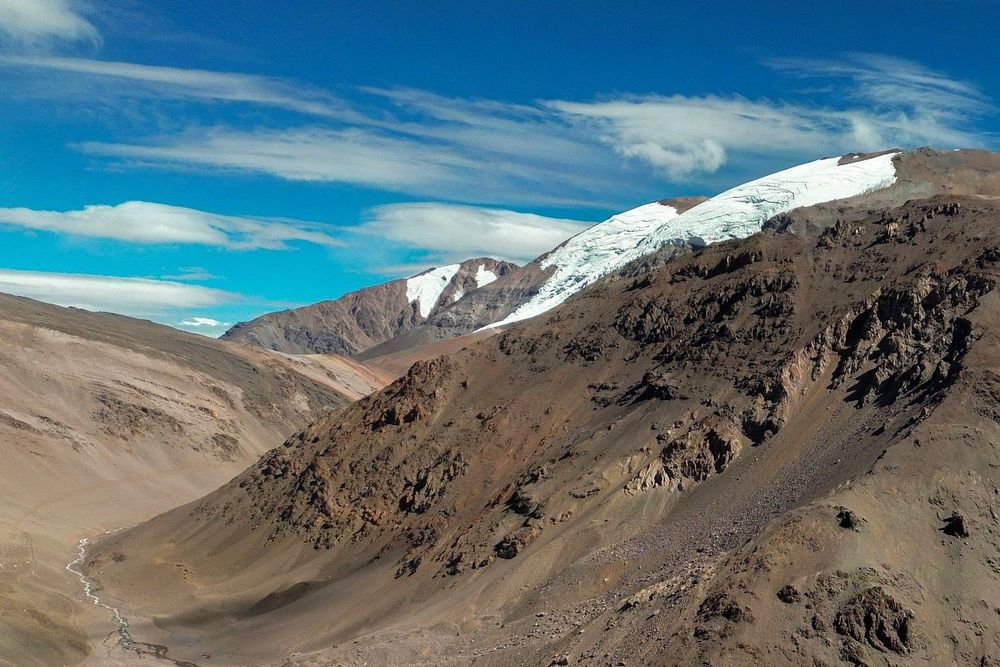
On the summit of Volcán Llullaillaco, a towering peak straddling the Chile-Argentina border in the Atacama Desert, oxygen levels hover at just 40 percent of sea level values. Temperatures plummet to minus 60 degrees Celsius. Winds scour barren slopes where no vascular plants can survive. For most mammals, including humans, such conditions prove fatal within hours.
Yet a tiny mouse has claimed this hostile realm as home.
The Andean leaf-eared mouse (Phyllotis vaccarum) has been found living at 6,739 metres above sea level on Llullaillaco, the second-highest active volcano in the world. That discovery establishes a new altitude record not just for mammals, but for all terrestrial vertebrates ever documented. The previous record-holder, the large-eared pika, was spotted at 6,130 metres during the 1921 British Mount Everest Reconnaissance Expedition—more than 600 metres lower and nearly a century ago.
Now researchers believe they have uncovered how this diminutive creature accomplishes the feat, revealing biological adaptations that allow it to function across one of the widest elevation ranges ever recorded for any mammal.
Breathing where oxygen vanishes
The mice possess a remarkable ability to adjust how their bodies use oxygen under extreme scarcity. Unlike most mammals that struggle as air thins, the volcano mice rapidly alter their metabolism and blood chemistry, enabling vital organs to continue operating even when oxygen availability drops by more than half.
Genetic analyses revealed changes linked to energy production and oxygen transport that appear to have evolved over thousands of years. These adaptations allow the animals to remain active while foraging and reproducing in conditions that would incapacitate most other species. At 5,000 metres, oxygen saturation in unacclimatized humans typically falls to between 70 and 80 percent; at 6,000 metres, conditions become even more punishing.
To put the altitude in perspective, Mount Everest Base Camp sits at 5,364 metres—more than 1,300 metres below where these mice have been found living.
A decade of discovery
The findings build on scientific expeditions conducted over 10 years to Volcán Llullaillaco. Researchers documented evidence of mice at elevations ranging from 5,070 metres at the mountain's base to the 6,739-metre summit. That evidence included live captures, mummified remains, active burrows and environmental DNA, confirming the presence of a resident population rather than occasional stragglers blown upslope by chance.
The species lives across an extraordinary elevation range—from sea level along the Chilean coast to volcano summits exceeding 6,700 metres. That represents the broadest elevational range of any mammal species, underscoring the animal's exceptional adaptability.
Survival without vegetation
At the elevations where these mice thrive, vegetation ceases entirely. The Andes vegetation limit sits at approximately 5,000 metres, meaning the mice live well above where even hardy alpine plants can take root. That raises longstanding questions about what the animals eat and how they obtain enough energy to survive.
Scientists believe the mice likely exploit windblown plant material, insects and other organic matter carried upslope by powerful mountain winds. However, many aspects of their ecology remain mysterious, and researchers continue investigating how such a small mammal sustains itself in an environment so devoid of obvious food sources.
Implications beyond the peaks
The discovery carries significance beyond satisfying scientific curiosity. Understanding how these mice cope with chronic oxygen deprivation may eventually inform research into high-altitude illness, cardiovascular disease and other conditions linked to reduced oxygen supply in humans.
Volcán Llullaillaco itself holds historical intrigue. It is home to the world's highest archaeological site, where nearly perfectly preserved Inca mummies were discovered in 1999 by National Geographic Explorer Johan Reinhard. The find demonstrated that humans, too, once ventured to these forbidding heights, though they required elaborate preparation and could not survive there permanently.
For now, the volcano mouse remains an evolutionary outlier: a creature weighing little more than a golf ball, quietly thriving where even experienced mountaineers need bottled oxygen simply to stay conscious. Its existence challenges assumptions about the upper limits of mammalian life and offers a window into the remarkable adaptability of life on Earth.