Afternoon congestion builds on major Dubai-Sharjah corridors
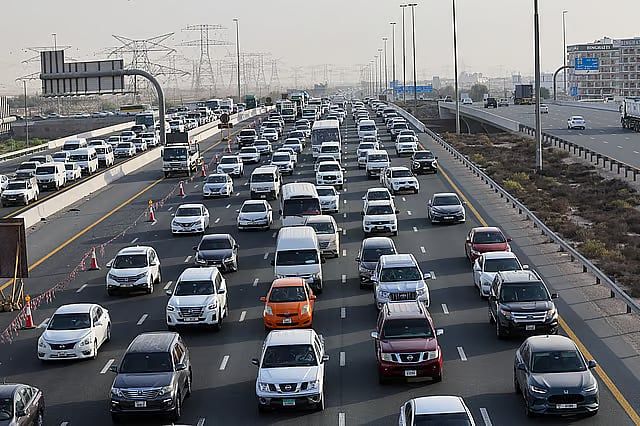
Heavy traffic is affecting multiple routes between Dubai and Sharjah this afternoon, with delays reported on Al Ittihad Road, E311 and several central Sharjah roads, compounded by multiple incidents.
Afternoon congestion builds on major Dubai-Sharjah corridors
Motorists traveling between Dubai and Sharjah are experiencing significant delays this afternoon as congestion builds across several major routes, according to real-time traffic monitoring data.
The corridor between the two emirates carries an estimated 1 million vehicle trips daily, making it one of the busiest stretches of road in the Middle East. Around 1.2 million vehicles travel from Sharjah towards Dubai each day, according to Dubai's Roads and Transport Authority.
Al Ittihad Road heavily affected
The most severe congestion is concentrated along Al Ittihad Road near the Dubai-Sharjah border, with traffic backed up around Al Nahda Park, Al Nahda Second and Sahara Centre. The road, which handles over 250,000 vehicles per day, is showing significantly slower movement than usual on this stretch.
Drivers heading south through Deira, Al Rigga and Al Garhoud are also facing slower journeys as commuter traffic moves towards the city centre.
E311 experiences widespread delays
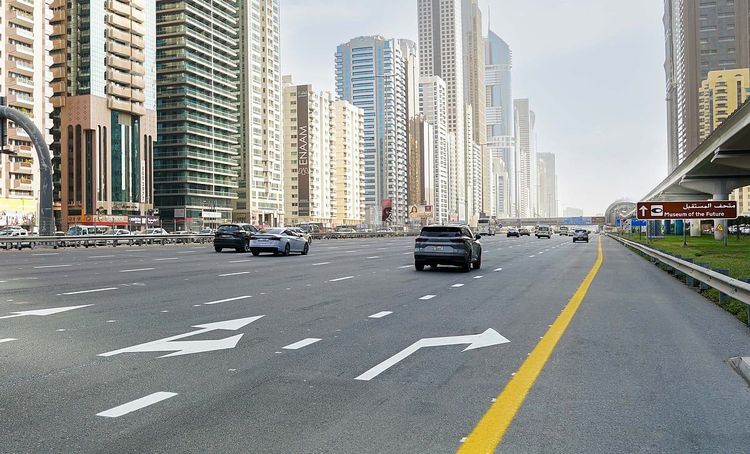
On Sheikh Mohammed bin Zayed Road, congestion is heaviest around Muwaileh Commercial, City Centre Al Zahia and the Muwaileh Bus Terminal, with slowdowns extending towards National Paints and surrounding industrial areas. Another congested stretch has been reported near Al Qusais Industrial Area and the Madina Mall interchange.
The eight-lane highway within Dubai accounts for approximately 32 per cent of all lanes designated for vehicles entering Dubai from Sharjah, making it one of the busiest roads in the country during peak periods. The daily traffic demand between the two emirates is accommodated through five major entry corridors comprising 25 lanes in total within Dubai.
Sharjah city routes slow
Within Sharjah itself, traffic is moving slowly on the main road near Al Qassimi Hospital, with congestion extending towards Al Khatt and Al Fayha. Al Dhaid Road is also experiencing delays, particularly near industrial areas and the City Centre Al Zahia interchange.
In central Sharjah, heavy traffic is affecting the areas around Al Qasimia and Rolla, with slower movement along the S101 and S112 corridors towards Souq Al Jubail.
Multiple incidents compound delays
Several incidents are adding to the congestion across the network. An incident near Sahara Centre and Al Nahda Park on E11 is affecting the merge towards Al Mamzar Beach and the Corniche, while another on E311 near Muwaileh Commercial and City Centre Al Zahia is causing additional delays.
Further incidents have been reported along Al Dhaid Road near Al Riffa Health Center and the SAIF Zone interchange, as well as in central Sharjah near Al Qassimi Hospital at the junction with Sheikh Mohammed Bin Saqr Al Qasimi Street. Road construction near Deira and the Waterfront Market is also contributing to longer journey times in that area.
During rush hours, journeys that typically take 15-20 minutes at off-peak times can stretch to 60-90 minutes or more on Dubai-Sharjah routes. Commuters traveling just 15km between the two emirates spend approximately 460 hours annually in traffic, equivalent to about 60 workdays.
The RTA is pursuing strategic projects to expand and upgrade alternative and parallel road corridors to Sheikh Mohammed bin Zayed Road to distribute traffic more efficiently across the network.