Lebanon passes sweeping amnesty law amid sectarian bargaining and prison crisis
Parliament approves the country's first amnesty legislation since 1991, expected to free thousands of prisoners while critics warn it perpetuates impunity through political compromises among Lebanon's sectarian factions.
Lebanon passes sweeping amnesty law amid sectarian bargaining and prison crisis
Lebanon's parliament approved a comprehensive amnesty law on Wednesday, the first such legislation in 35 years, aimed at addressing severe prison overcrowding but criticized as the product of sectarian deal-making that undermines accountability.
The legislation grants amnesty for crimes committed before March this year, with certain exceptions. Parliament has not yet released the final text, leaving uncertainty about precisely who will benefit from the measure.
Prison crisis drives legislation
For years, Lebanese lawmakers had worked to pass the bill as a solution to prison overcrowding, which has reached critical levels due to slow-moving trials and prolonged detention without judicial proceedings. By the end of March last year, the National Human Rights Commission reported that the prison population had surged to 300 percent of capacity, housing more than 6,200 inmates.
Recent data shows nearly 83 percent of detainees remain in pretrial detention without a final judgment. The crisis intensified when six prison facilities in southern and eastern Lebanon were destroyed during the 2023-2024 conflict, forcing the transfer of inmates to already overcrowded facilities.
Sectarian politics shape amnesty
The law gained momentum following the 2024 fall of Syrian president Bashar al-Assad, which brought renewed attention to Islamist prisoners jailed over events linked to the Syrian civil war. Many of these inmates from Tripoli, Lebanon's northern Sunni-majority city, were accused of attacking the Lebanese army, participating in clashes and planning bombings.
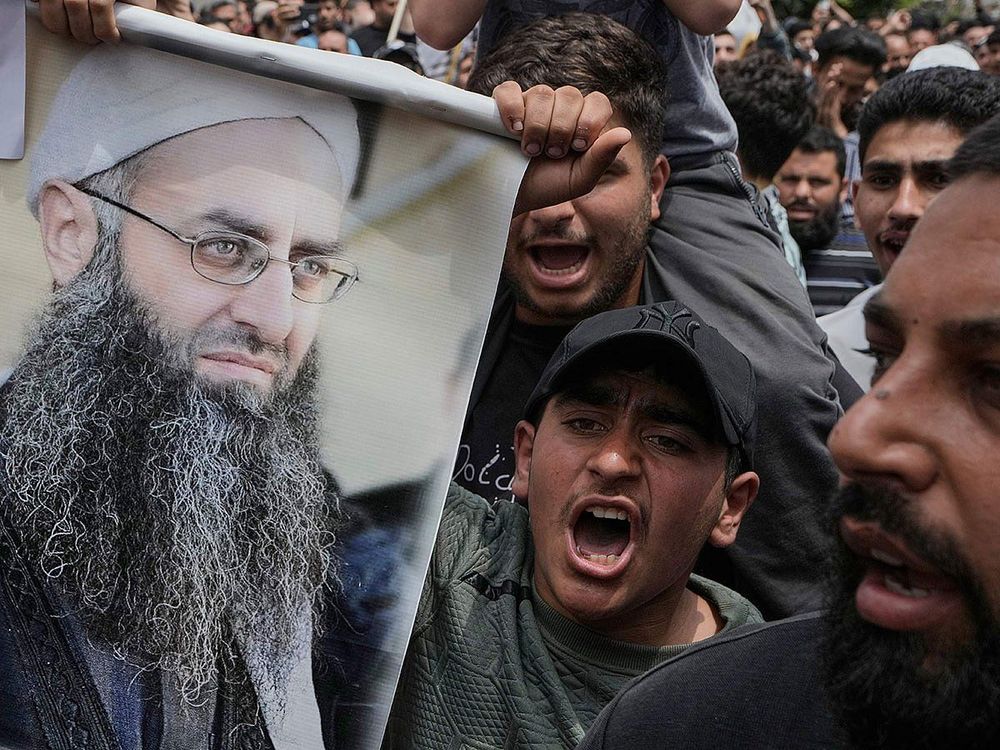
Sunni cleric Ahmad al-Assir became a focal point of the debate. Arrested in August 2015 at Beirut airport while attempting to flee to Egypt using a forged passport and in disguise, al-Assir was sentenced to death in September 2017 for his role in June 2013 clashes in Sidon that killed 18 Lebanese soldiers.
Other political and religious groups pressed their own demands. Hezbollah called for amnesty for thousands detained over drug offences and car theft in the Baalbek and Hermel districts. Christian parties pushed for provisions covering families of those who joined the Israeli-backed South Lebanon Army and fled to Israel after its withdrawal in May 2000, ending a 22-year military presence.
Scope and exclusions
Based on the bill voted on and lawmakers' statements, the law provides broad amnesty with specific exceptions. Murder and terrorism acts against civilians, soldiers and security forces will not be pardoned but may receive reduced sentences, potentially benefiting Islamist prisoners.
According to lawmaker Imad al-Hout, the legislation reduces death penalty and life imprisonment sentences to 17 prison years, equivalent to 12 years and nine months of actual imprisonment. This provision affects 85 people who were on death row at the end of 2025, according to the Ministry of Justice's Directorate of Prisons. Al-Hout stated that 79 of 146 Islamist detainees or convicts should be released immediately.
The law also mandates the release of inmates detained for more than 12 prison years without a court verdict. However, it excludes crimes of treason, espionage and ties with Israel, though it may benefit families of accused Israeli collaborators. Corruption, financial crimes and illicit enrichment in the public sector are also excluded.
Historical context and criticism
The last general amnesty in Lebanon was enacted in 1991, one year after the civil war ended. That law granted amnesty for crimes committed before March 28, 1991, primarily benefiting former war belligerents who became part of the post-war political elite through the Taif Agreement. The 1975-1990 civil war killed approximately 150,000 people and left 17,000 missing.
Nizar Saghieh, executive director of Legal Agenda, said the legislation allows each political group to claim its share.
Amnesty has become the principle and accountability the exception,he told AFP, warning that vagueness about exempted crimes could spark legal disputes.
Saghieh argued the law lacks a genuine reconciliation framework or broader justification for the pardons.
All that is happening is a kind of compromise and bargaining, without a real narrative. The amnesty comes without any real reconciliation, without any work to amend and reform the laws, and without a general vision of what should be pardoned and what shouldn't,he said.
The legislation embodies power-sharing among Lebanon's factions, he added, rather than building authentic social cohesion.
However, supporters defended the measure. Legislator Bilal Abdallah insisted the law was
national and humanitarianbefore being sectarian. Fellow lawmaker Hout added:
Today we open a new door to reconciliation and justice, and we affirm that healing national wounds requires law, justice and the state.
The amnesty law comes one day after parliament abolished the death penalty on August 11, making Lebanon the first Middle Eastern country and second Arab nation after Djibouti to end capital punishment. The 128-member parliament approved the abolition by majority vote, with Hezbollah's bloc voting against. Lebanon had observed a de facto moratorium on executions since January 2004, though courts continued issuing death sentences during that period.